ChristianaCare Invests in Certification Program to Strengthen Delaware’s Community Health Workforce
$26,500 in community benefit funding helps launch certification to improve access to preventive care statewide

The challenges Briana Nkwenti helps her patients navigate don’t always show up in lab results, but they often explain them.
As a community health worker with ChristianaCare, Nkwenti serves mostly older adults grappling with chronic conditions like high blood pressure and diabetes. In many cases, it’s everyday challenges like transportation, safe housing, food access and social isolation that influence how well patients can manage their health.
“We wear a lot of hats,” Nkwenti said. “Sometimes I’m a social worker, sometimes a therapist, sometimes just someone to listen. It’s showing up again and again in whatever role people need that helps them improve.”
Sisters Sonja and Robin McRant of Kent County, Delaware, know this firsthand. Years ago, Briana helped Sonja manage her own hypertension by connecting her to a healthy lifestyles program, securing transportation, and making sure she had the right supplies and support. More recently, Sonja became Robin’s caregiver after her sister suffered multiple strokes. Briana stepped up again, helping the sisters coordinate care, find covered medical supplies and connect with community-based resources.
“She has alleviated a lot of overwhelming pressure for me,” Sonja said. “I’m grateful for the resources she’s brought to us — things we’re entitled to but weren’t even aware of.”
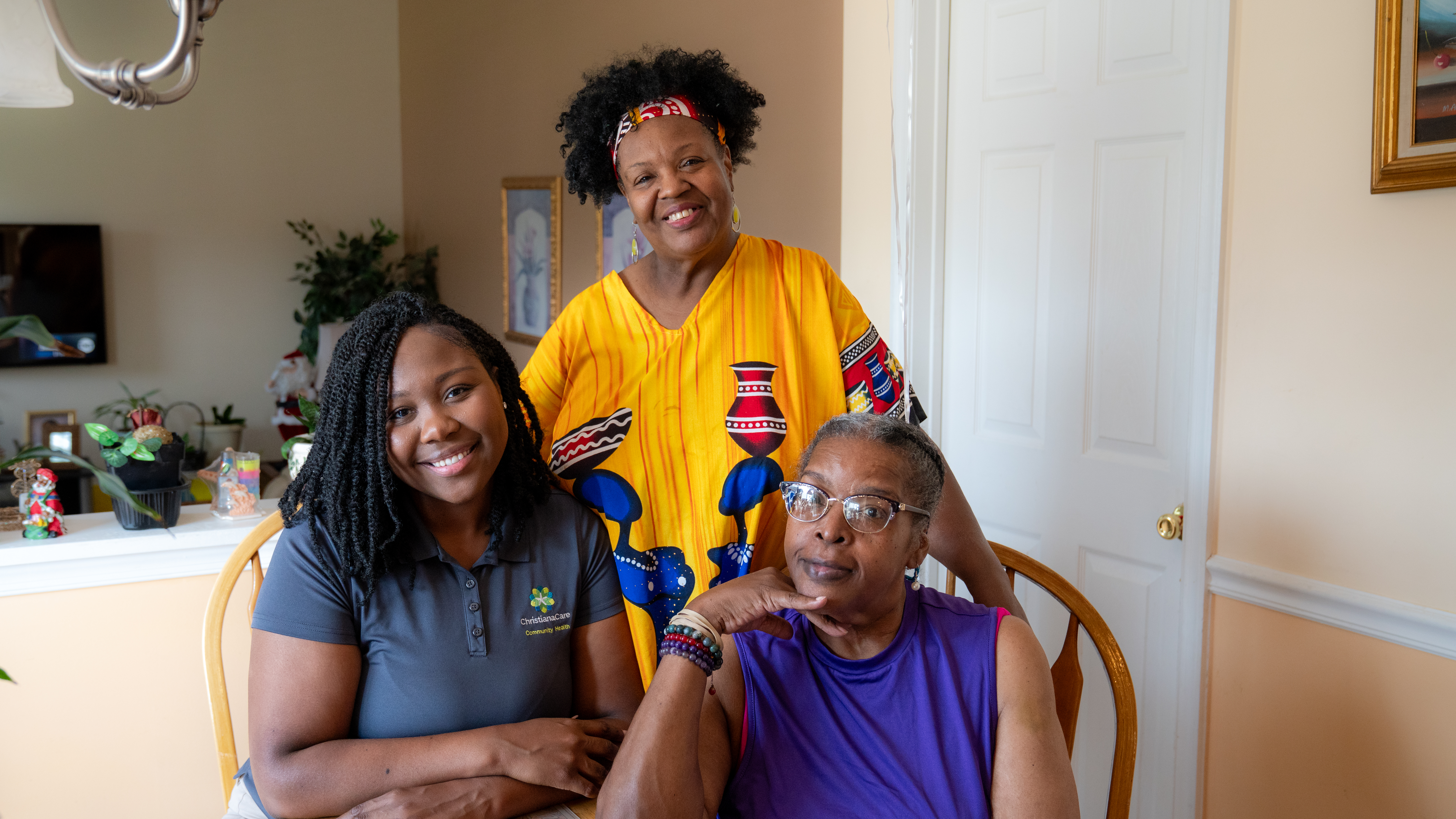
Nkwenti’s work is part of a broader effort to recognize and professionalize the role of community health workers, who are increasingly seen as essential to addressing the social drivers of health. ChristianaCare is putting its weight behind that effort, contributing $26,500 in community benefit funding to help launch Delaware’s first certification program for community health workers.
That support, matched by Delaware Health Force, will cover application fees for the first 500 workers and help build the infrastructure needed to bring certification statewide.
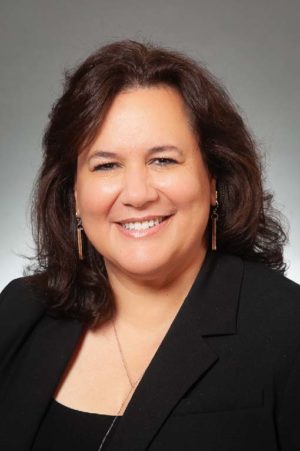
“Community health workers are key to building a health system that works for everyone, wherever they are,” said Jacqueline Ortiz, ChristianaCare’s chief community health impact officer. “ChristianaCare is committed to providing high-quality, affordable care that addresses root causes, emphasizes prevention and empowers our neighbors to manage their health. We’re proud to help lay the groundwork for a credentialing process that supports these professionals and the communities they serve.”
Starting Nov. 1, current professionals can apply for a Certified-Community Health Worker (C-CHW) credential based on their work experience or completed core competency training. Four trainings will be eligible for this certification.
ChristianaCare has 65 community health workers embedded across primary care, women’s health, emergency medicine, behavioral health and population health programs. By building trust and bridging care gaps, they help patients navigate challenges like transportation, food access and chronic disease — often preventing unnecessary hospital visits.
While certification is optional for community health workers, it establishes consistent standards, better coordination and potential Medicaid reimbursement in the future. More than 20 states already reimburse community health worker services through Medicaid — a model Delaware is working toward. In May, Gov. Matt Meyer signed a resolution directing state health officials to develop a plan by early 2026 to allow Medicaid reimbursement for community health worker services.
“Certification is a low-cost, high-impact investment in Delaware’s public health infrastructure,” said Tim Gibbs, MPH, director of Delaware Health Force, a workforce development initiative of the Delaware Academy of Medicine and Public Health. “It offers community health workers professional recognition, prepares them for future reimbursement opportunities and supports smaller organizations that rely on this workforce but lack stable funding. We’re proud to partner with ChristianaCare on an effort that strengthens grassroots care statewide.”
The certification program is led by the Community Health Workers Association of Delaware (CHWAD) and will be managed by the Delaware Certification Board. CHWAD worked closely with health workers statewide to design a flexible program that supports both formally trained and experienced workers without prior credentials.
“We are grateful to ChristianaCare and Delaware Health Force for helping to kick this off,” said Dawn Ferguson, chair of CHWAD. “Certification gives community health workers the clarity and confidence they need to thrive in a complex system. It helps define their role and strengthens trust across the health and social service landscape.”
Research shows investments in community health work are a cost-effective way to improve health outcomes. A national study published in Health Affairs found that programs often return two to three dollars for every dollar invested, largely by reducing avoidable hospitalizations. ChristianaCare’s Community Health team has seen similar results, with reduced emergency department visits and improved chronic disease management after just 90 days of support.
“We know that roughly 80% of health outcomes are shaped by what happens outside the doctor’s office,” said Erin Ridout, MSW, MPH, community health impact manager at ChristianaCare and chair of CHWAD’s advocacy committee. “Community health workers help people manage the real-life challenges that affect their health, and they do it with empathy and trust.”
Since 2019, more than 400 community health workers have completed the Delaware Division of Public Health’s Core Competency Training, representing over 50 health organizations statewide. Additional approved training providers offer multiple on-ramps for aspiring workers to gain essential skills and prepare for certification. The new certification builds on this foundation by offering a statewide credential that affirms core skills and opens professional pathways.
For Nkwenti, certification is one more step toward strengthening a workforce that already plays a vital role in connecting care to real life.
“It’s easy to say, ‘choose healthier food options,’ or ‘take your medications,’” she said. “However, those goals are challenging to meet if the patient doesn’t have access or the support they need. That’s where we come in.”
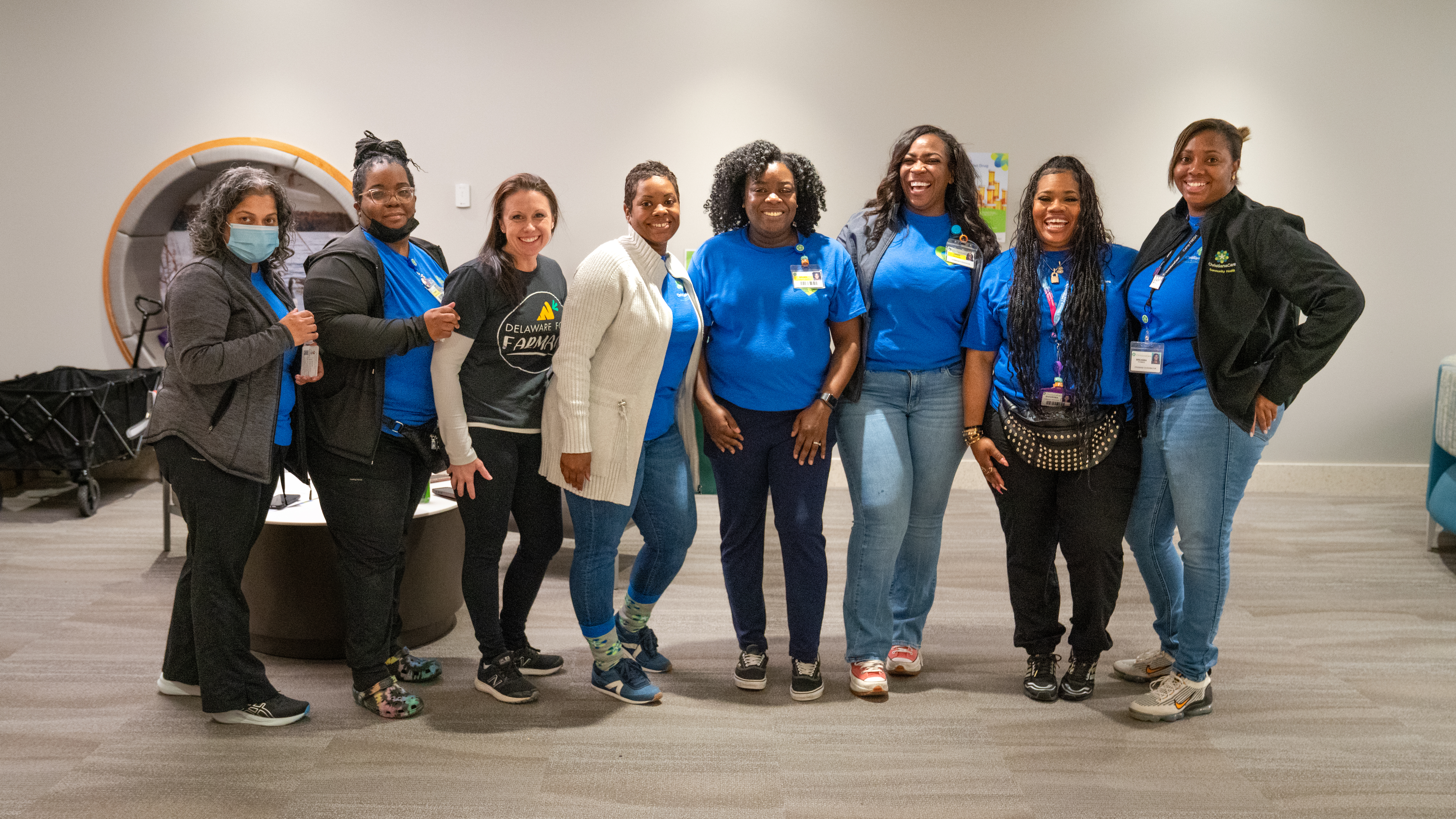
Jaree’ Jackson, a community health worker with ChristianaCare’s Center for Women’s and Children’s Health in Newark, supports women managing maternal and mental health.
Jackson completed the state’s six-week core competency training, which emphasized health literacy, open-ended communication and trauma-informed care. Each of these skills, she says, made her more effective in complex and emotional situations.
“I learned how to advocate for patients, how to listen better and connect them to care. I feel like I’ve grown as a person and as a professional,” she said. “This work is about meeting people where they are and walking with them.”
To learn more about CHWAD’s certification program or apply, visit chwadelaware.org.