Arlene Daniels Was Ready for Change. Food Farmacy Helped Her Begin
ChristianaCare’s redesigned Delaware Food Farmacy helps patients use healthy food, cooking skills and coaching to manage chronic disease

Arlene Daniels arrived at the kitchen at ChristianaCare’s Eugene du Pont Preventive Medicine & Rehabilitation Institute (PMRI) with a new cane.
It was a single-point cane, replacing the four-pronged cane she had leaned on through the worst of her health. She pointed it out to Eric Plautz, MS, NBC-HWC, CHES, the ChristianaCare community health worker and clinical health coach who had been visiting her home, calling her between visits and, that day, cooking with her at PMRI.
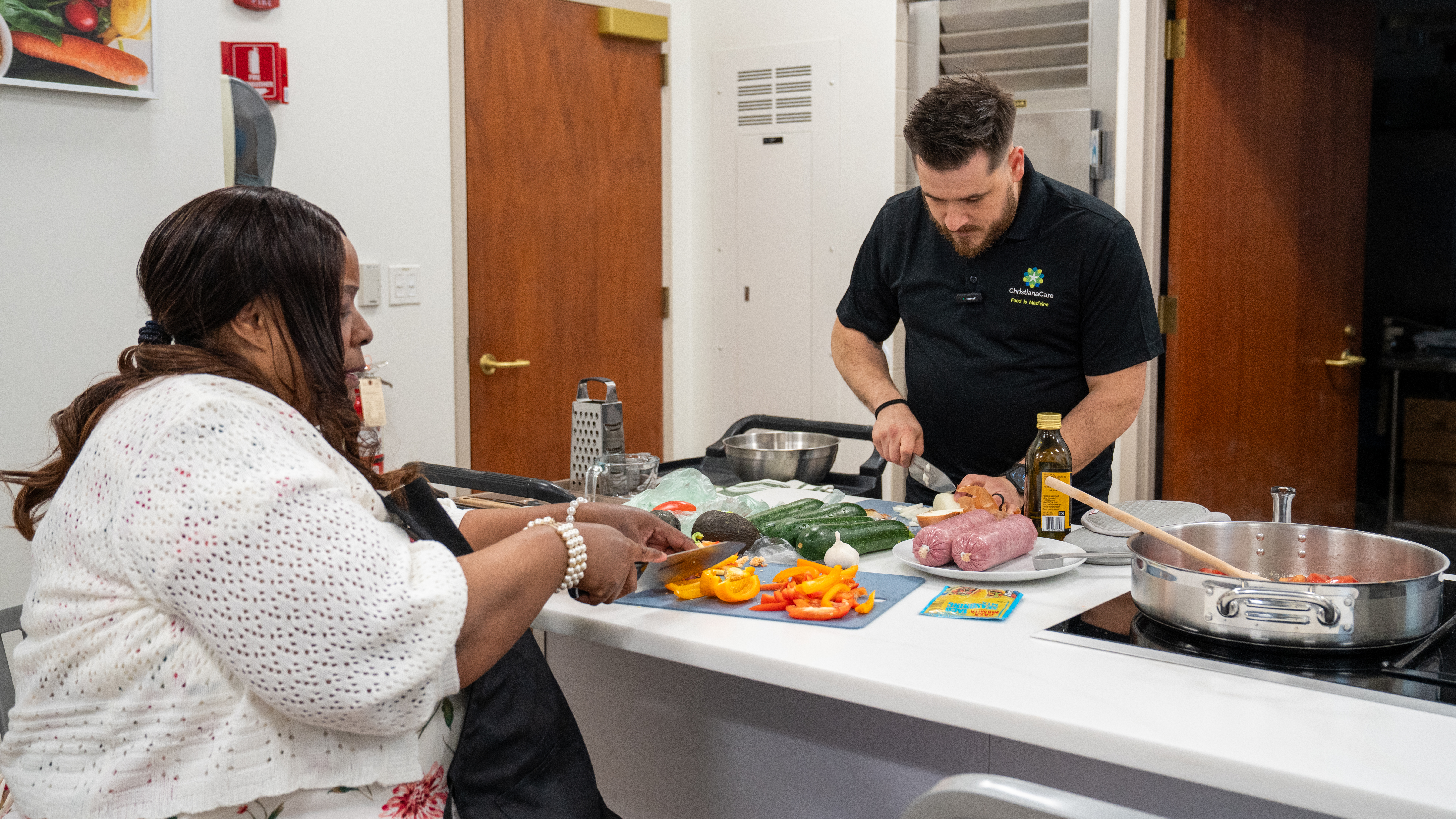
On the counter were the beginnings of lunch: zucchini, peppers, tomatoes, avocado, onion, garlic, ground turkey and seasoning for taco zucchini boats. Plautz had chosen the recipe to show how color, portion balance, whole grains, low sodium and flavor could fit on the same plate.
Arlene was ready to try it.
A Question at the Right Time
Three months earlier, when she entered ChristianaCare’s Delaware Food Farmacy program, Arlene was trying to manage diabetes, high blood pressure, food insecurity and the cost of medical tests her doctor had ordered. Her A1C was 10.3, indicating elevated blood sugar (glucose). Her blood glucose readings were often more than double the normal range.
She had spent more than 35 years as a social worker, advocating for others. Now she was the one asking for help.
“That humbled me,” she said.
She had tried to make lifestyle changes before. Years earlier, bariatric surgery helped her lose 150 pounds. She kept 80 pounds off before some of the weight returned and the cost of healthier food became harder to manage.
Then, while meeting with ChristianaCare’s Patient Financial Services team, she noticed a flyer on a bulletin board. It mentioned the Food Is Medicine model of care and the Delaware Food Farmacy program.
“I’m very inquisitive,” Arlene said. “I asked the question.”
That question led her to medically tailored groceries — foods selected to support patients’ health needs — nutrition education, one-on-one support and the first patient spot in the revamped Delaware Food Farmacy.
First launched in 2022, the Delaware Food Farmacy has connected ChristianaCare patients with medically tailored groceries and support for managing chronic disease. The redesigned Food Is Medicine model keeps food access at the center while placing greater emphasis on nutrition coaching outside the clinical setting, culinary medicine, chronic disease self-management and long-term behavior change.
For Michelle Axe, MS, CHES, manager of Food Is Medicine, the redesign grew out of what the program had already shown: when patients with uncontrolled diabetes had access to “the right food and the right support,” outcomes such as glucose levels, weight and BMI improved.
“As we continued to evaluate the program and looked to national best practices, we recognized an opportunity to make an even greater impact,” Axe said.
Plautz said the new health-coaching model was designed to meet patients wherever they are in their understanding of food and health, then build from there.
“We want to come to patients and say, ‘All right, where are you at in your knowledge and your understanding of nutrition and healthy eating?’” he said. “We’re building with them on a strong foundation so that, by the end of the program, they’re more informed, confident and capable of following through.”
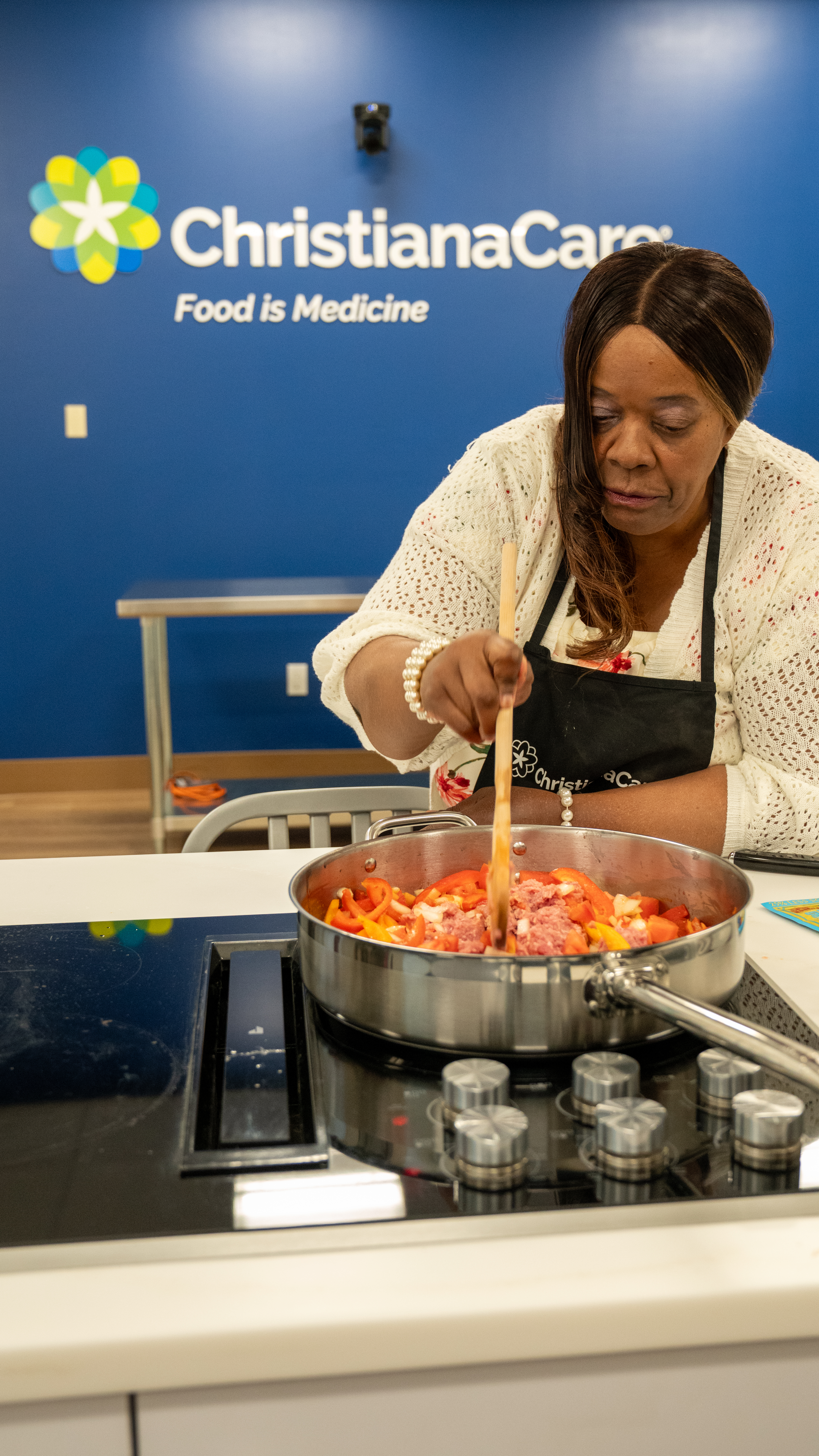
Every Wednesday, Arlene receives a delivery from Lutheran Community Services, which partners with local farmers and ChristianaCare to provide groceries for the program. But she quickly saw that the program was asking more of her — and offering more to her — than a box of food.
She had found help with groceries before. What she had not found, she said, was someone to walk her through how those foods could change her health.
At the Kitchen Counter
Before that cooking session at PMRI, Plautz had already spent time with Arlene in her own kitchen. The first thing he did was open her spice cabinet.
She had almost 100 bottles of seasoning, accumulated over years of cooking for her family. She knew how to cook. She loved to cook. But she had never measured the sodium she was adding when she shook seasoning over meat, vegetables or rice.
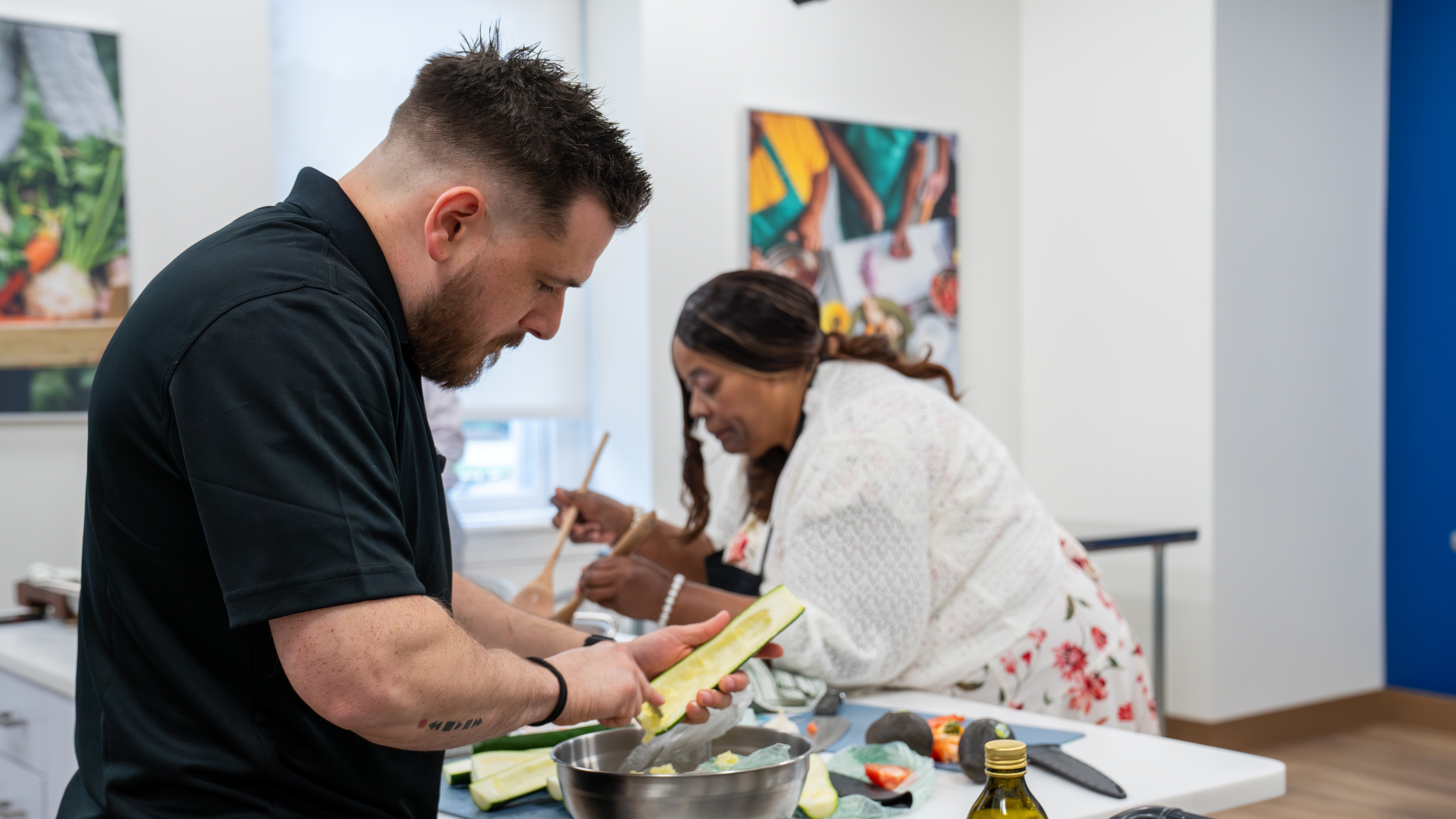
Plautz asked her to pick a bottle, read the label and measure what she would usually use.
“He said, ‘Wait a minute, Arlene. You realize it’s 340 milligrams of sodium in this? There’s 400 in this?’” Arlene recalled. “And I never thought about it.”
The program provides patients with herbs and spices that can help them keep flavor while reducing sodium. Plautz also gave Arlene a phrase she now repeats: “Season to taste, not season to cook.”
Arlene began using the new seasonings. Her food still tasted good, she said, but it was no longer “loaded” with sodium.
“I tell people: Never in anything you do, never think that you have arrived,” she said. “I’ve always loved to cook, but Eric has helped me to see there are healthier ways to enjoy food.”
For more information about the ChristianaCare Food Is Medicine program, email foodismedicine@christianacare.org or call 302-428-2804.
Alyssa Benjamin, MS, CCHW, a University of Delaware-trained clinical health coach and Plautz’s colleague on the Food Farmacy women’s health track, helped develop the curriculum and a simple Four-Step Healthy Meal Formula: a fruit or vegetable, a grain or starch, a protein and a sauce or topping. The point is not to hand patients a rigid menu, she said, but to help them make healthy and balanced meals they can repeat and adapt.
“We’re meeting people where they are, focusing on progress, not perfection,” Benjamin said. “My goal is to help patients get where they need to go, not to come in with an agenda. The patient is the driver of their health journey. I want them to walk away from this program knowing they are capable and confident in their ability to make better choices when it comes to their health.”
That includes culture. Health coaches ask patients how they shop, what they grew up eating, what their families like and what flavors feel familiar. Plautz said he does not want to take someone’s culture out of the food. He wants to help patients expand what they already know.
Arlene understood that. Her own kitchen was filled with the habits, foods and flavors of a lifetime. The work was not to erase those habits, but to look at them honestly — one label, one portion, one meal at a time.
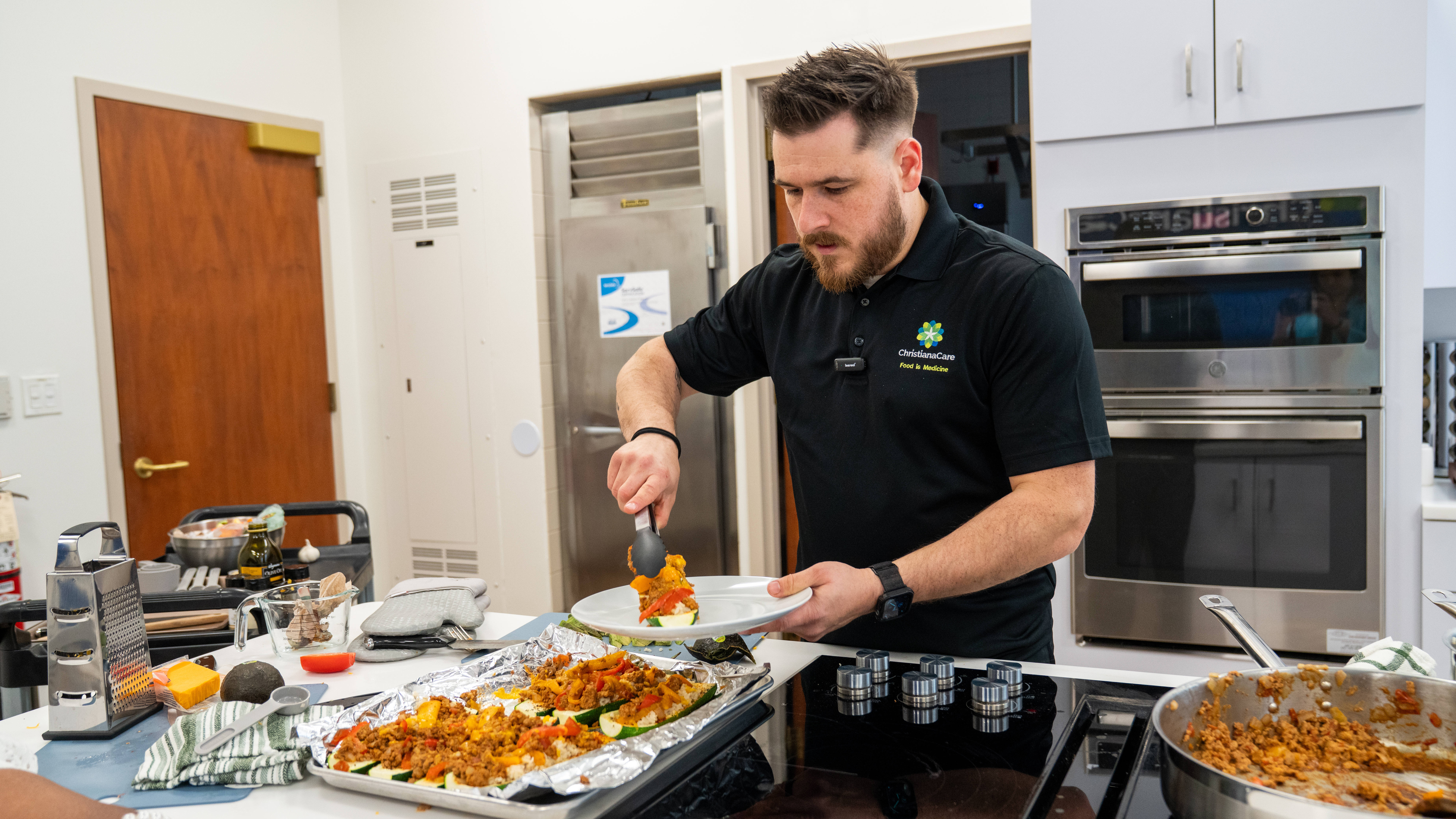
Back in the ChristianaCare kitchen at PMRI, Plautz talked through the zucchini boats as he cooked. The session was part of the program’s culinary medicine approach, bringing nutrition science into the kitchen so patients can practice with the foods, tools and flavors they actually use.
The vegetables brought color. The whole grain helped make the meal more balanced. The seasoning was enough, but not too much.
Arlene watched, asked questions and tasted.
Try the Food Farmacy’s Turkey Taco Zucchini Boats for yourself.
Ready to Make a Change
She had already made changes at home. She stopped drinking juice and soda. She stopped eating late at night. She began choosing fruit, cucumbers or yogurt with pumpkin seeds for snacks. She read labels. She wrote down what she ate in a daily food journal designed by her daughter, Ashley.
Ashley had studied nutrition and had tried before to encourage her mother to eat differently. This time, she noticed her mother was ready — and that the program had given her a coach she trusted.
“If you’re not ready to make that change, a person can talk and lay it out right in front of you, but nothing is going to happen,” Arlene said. “But when Eric came in my life, I was ready.”
Plautz did not make weight loss the center of their conversations. He asked questions, encouraged her and helped her set goals she could own.
“He never made me feel under pressure to do anything,” Arlene said. “He emphasized the food, the healthiness of eating the food, portion control.”
Plautz also encouraged Arlene to start walking. She was hesitant. Chronic arthritis, her weight and her balance all made walking feel difficult. Even a trip to the grocery store could leave her tired.
Then Plautz offered to walk with her for moral support. Arlene called that offer “the defining moment and driving force” that helped her begin.
Since April, she has been walking three days a week for at least 20 minutes — something she said she had not done in more than two years. At first, she walked up and down her block. Then she noticed she could move faster. Then came the single-point cane.
“That may sound simple,” Arlene said, “but for me, that was a remarkable victory.”
A Life Opening Back Up
The changes have started to show up in Arlene’s medical chart. Her glucose readings now range from 90 to 145 before meals and 150 to 185 after meals — much closer to the target ranges used for many adults with diabetes. Her insulin dose has been reduced, and her care team has begun lowering her blood pressure medication. She said she no longer needs acid reflux medication and is sleeping through the night more often, instead of waking four or five times.
The changes are visible in other ways, too. She has more energy. She talks about returning to church with her husband. When she tried to resign as deaconess, the chair of the church refused to accept the letter and told her the seat would be waiting when she was ready.
“There was a time when I felt stuck, like I was in a dark tunnel with no way out,” Arlene said. “But through this program, through the consistency, the care, the support, I now see a real bright light again. I feel alive again.”
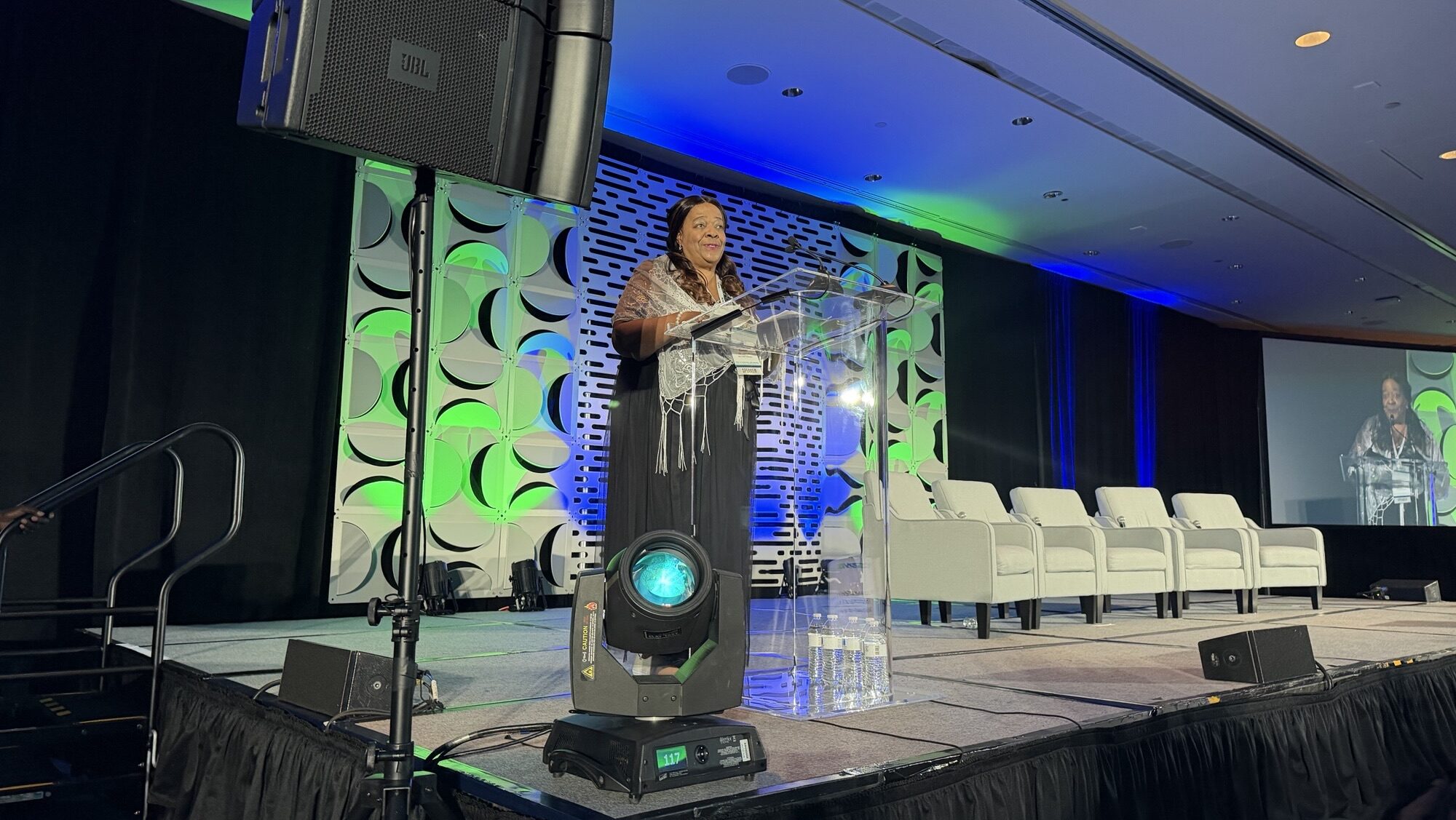
In June, Arlene stood at the national Food Is Medicine Conference and told that story herself. She thanked ChristianaCare, the Food Is Medicine team, Lutheran Community Services, her husband, her children and Plautz. Then she introduced Lt. Gov. Kyle Evans Gay, chair of the Delaware Food Is Medicine Committee, whose work includes advancing sustainable funding for Food Is Medicine programs.
“This program didn’t just teach me how to eat better,” Arlene said toward the end of her remarks. “It taught me how to live better.”