ChristianaCare Launches Internship at Cawley Center’s Organoid Core; Del Tech Undergrads Participate
Students gain hands-on experience with organoids while working with cancer researchers

In June, ChristianaCare’s Cawley Center for Translational Cancer Research launched a summer internship program at the Center’s organoid core, a specialized laboratory where researchers use cells from patients’ tumors to identify potential cancer therapies for each individual.
The organoid core at the Helen F. Graham Cancer Center & Research Institute was the first such laboratory created in a community cancer center nationwide. It’s also the first to offer an internship program.
“Most organoid cores are at large academic centers,” said Jennifer Sims-Mourtada, Ph.D., associate director of the Cawley Center. “Internships there would be with a researcher, focusing on their work, not necessarily focusing on the techniques of organoid culture and drug screening.”
Two undergraduate students from Delaware Technical Community College are the program’s first interns. They became interested in the organoid core after Sims-Mourtada and ChristianaCare research scientist Shirin Modarai, Ph.D., gave a presentation about organoids during a Del Tech genetics class.
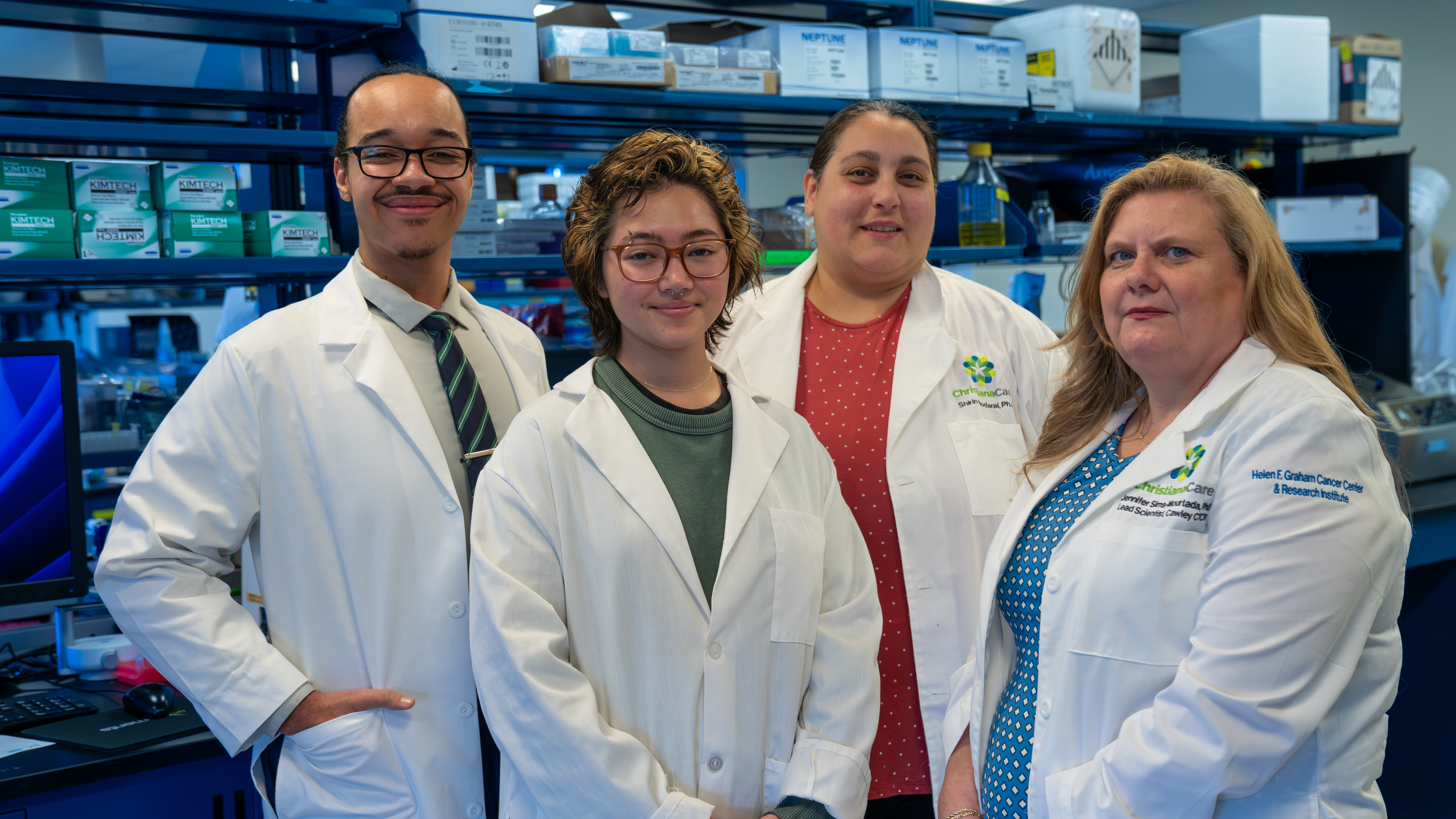
This June and July, the interns are working in the organoid core for eight weeks. They have not only learned about organoids – tiny, three-dimensional models of patients’ actual tumors, derived from patients’ tumor cells – they have created them.
“It’s hands-on, learning as they’re doing it, everything from getting the tissue processed to ultimately growing the organoids,” Modarai said. “They’ve done it under my supervision, but the goal is that they’ll eventually be able to work independently from the beginning to the end of the process.”
Organoids preserve the genetic and molecular qualities of the tumors they were derived from. Researchers can use that crucial data to screen cancer drugs and identify new biomarkers that could help clinicians treat each patient with the most effective personalized therapies.
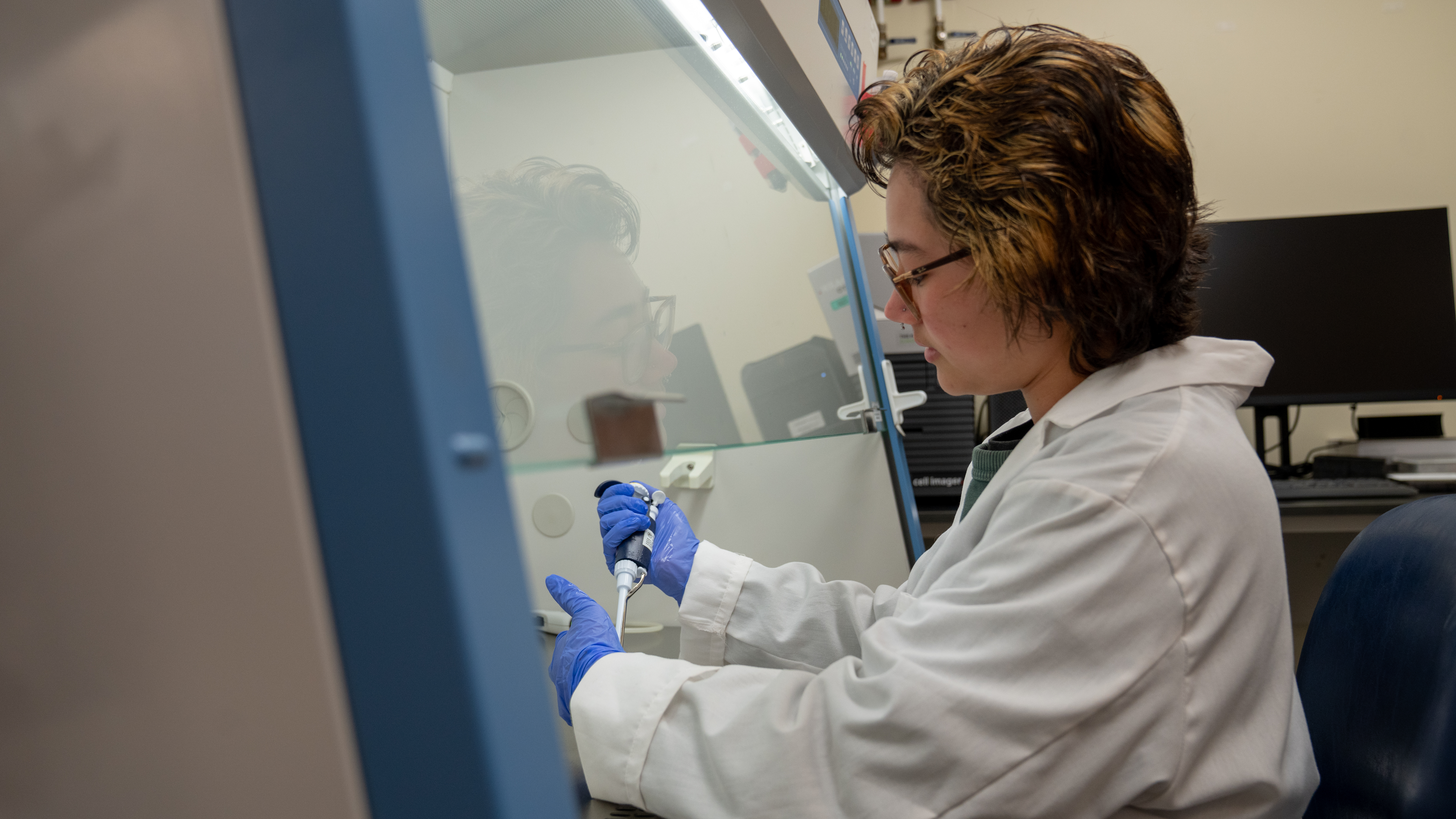
The organoid core researchers meet regularly with cancer clinicians to discuss patient cases. This summer, the interns are attending the meetings, as well.
“This is the only research lab dealing with cancer where all the students, whether they’re PhDs, masters or undergraduates, get exposure to the clinical environment,” said Nicholas Petrelli, M.D., director of the Cawley Center. “They go to tumor board conferences, listening to the problems that clinicians face in treating patients. For their work, scientists need to understand the problems that clinicians face. That’s what translational research is, translating findings at the bench to the bedside.”
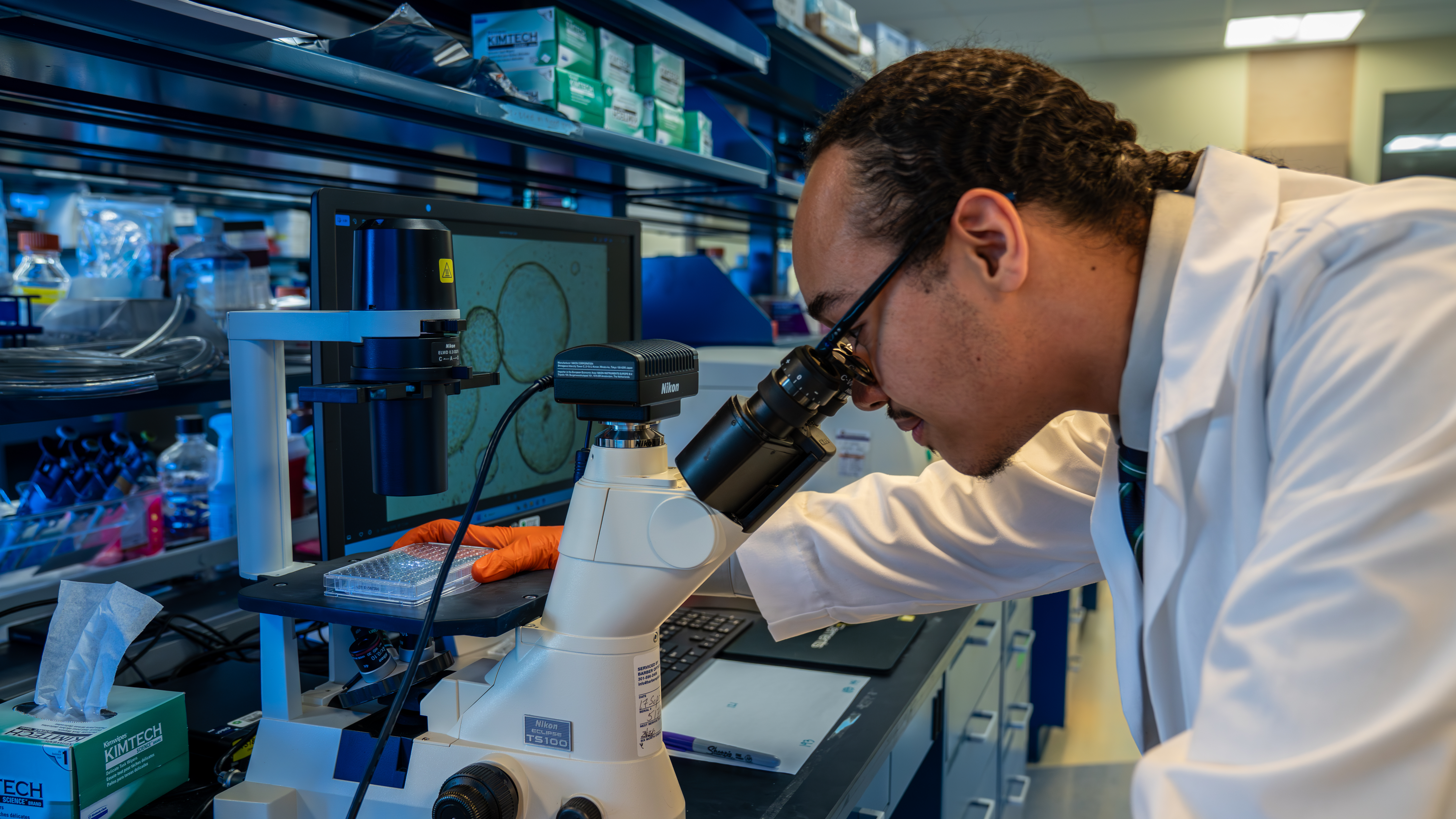
This summer, organoid core intern Alexander Loux, 23, of Middletown has appreciated learning advanced lab techniques in a setting that isn’t typically available at community cancer centers. He has also gained a greater appreciation for the connection between research and clinical care.
“This isn’t theoretical, this is directly applying it to patient health, and that’s really what got me interested,” said Loux, who studied biology and chemistry at Del Tech and is now enrolled at the University of Delaware. “I was always convinced I’d go for higher education, a PhD, but after doing this type of research, I can seriously see myself considering a medical school path.”