A Step in the Right Direction
ChristianaCare's high school mobility interns help hospitalized patients get moving while charting their own path in healthcare
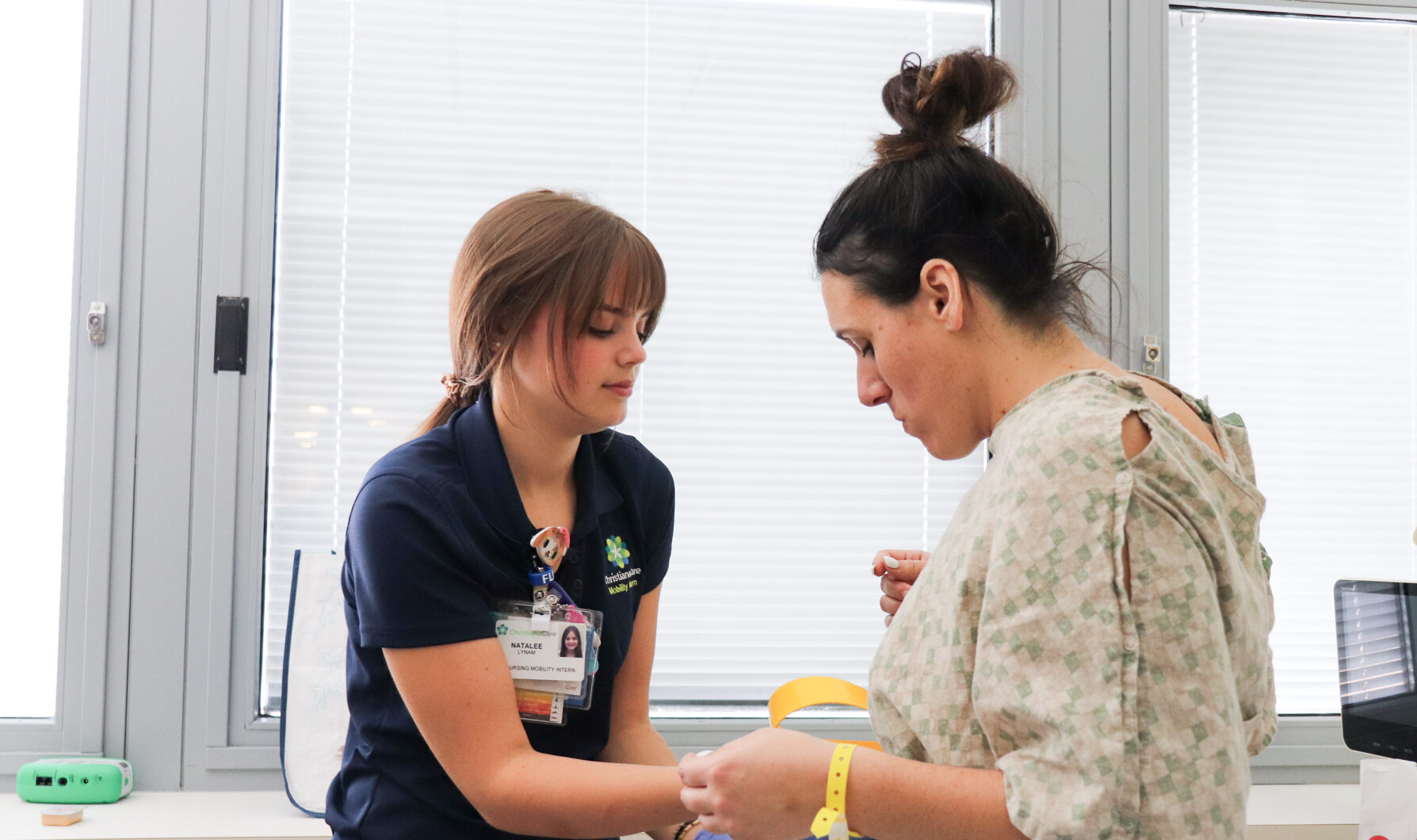
The patient had a rehab bed waiting. He just couldn’t get to it.
After days in bed on a medical-surgical unit at Christiana Hospital, he needed to rebuild enough strength and endurance to safely take the next step in his recovery.
Then Natalee Lynam arrived on his floor.
Natalee, a senior at Hodgson Vo-Tech, is one of ChristianaCare’s first “mobility interns” — high school students from local vocational-technical schools who spend a paid co-op year on medical and surgical units, walking with patients to help them regain strength and get home sooner. The job is purposefully narrow and clinically meaningful.
“We’re an opportunity for a patient to walk an extra one or two times a day,” Natalee said.
Over the course of several shifts, she and her intern partner kept their patient moving. At the end of one of those shifts, she got to see him leave for rehab.
Why Mobility Matters
The Mobility Intern Program — believed to be the only one of its kind in the tri-state region — launched at Christiana Hospital in July 2025 and expanded to Wilmington Hospital in November. Nurse leaders saw a clinical gap that nurses and patient care technicians know well: even brief stretches of bed rest can take a measurable toll on a patient’s function.
“You’d be amazed at how much function is lost,” said John Dickerson, MSN, RN, CVN, BC, the nurse manager who oversees the program through ChristianaCare’s nurse float pool. “As little as 6 to 12 hours on bed rest, and a patient may not be able to do what they did before coming to the hospital.”
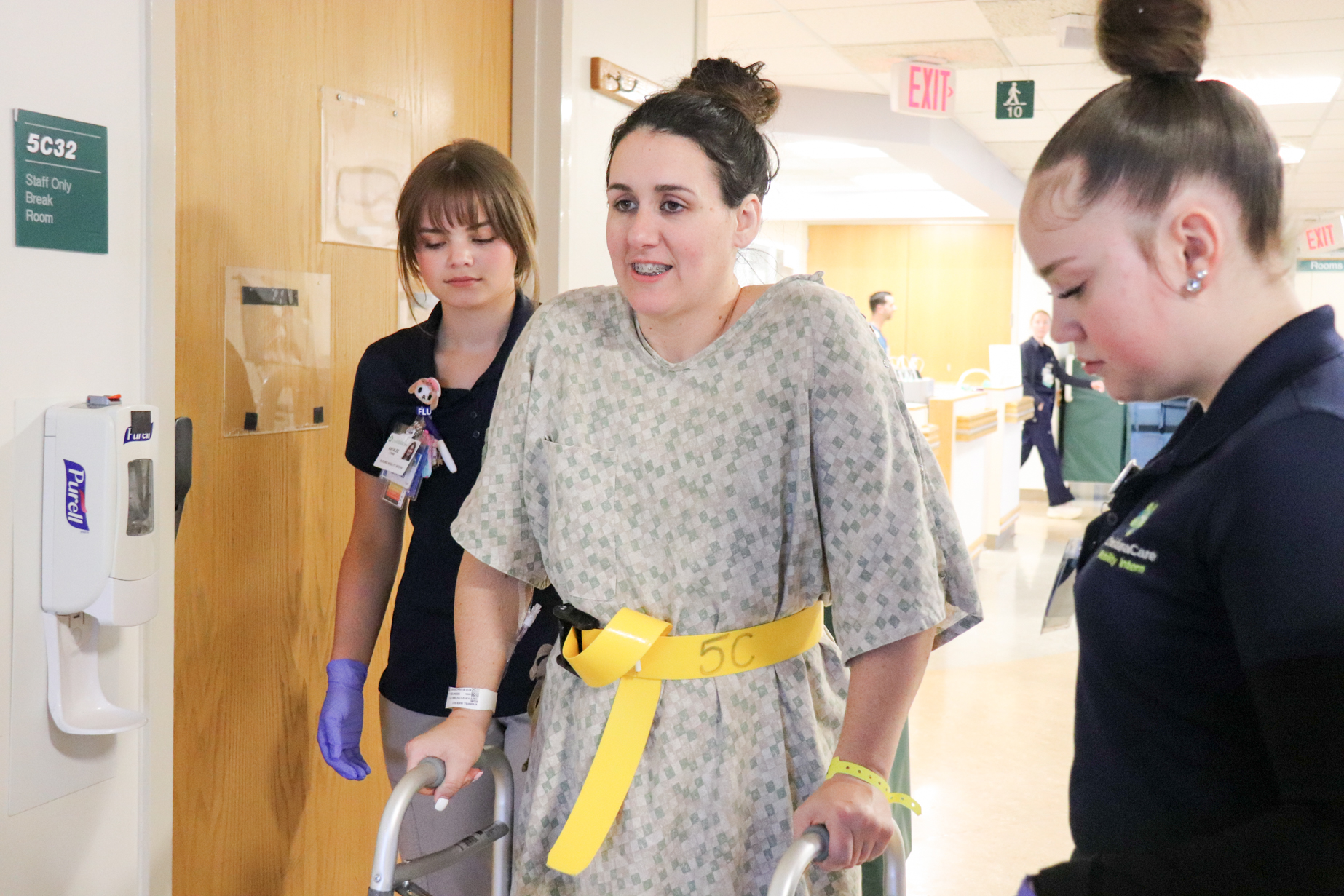
Nurses and patient care technicians strive to get patients out of bed and on their feet as often as possible. Physical therapy, when ordered, provides targeted assessment, treatment and recovery support tailored to each patient’s needs. Mobility interns help extend safe, appropriate walking opportunities throughout the day for patients who are ready for that extra movement.
The 16 students who started at Christiana Hospital were assigned to four medical units in pairs. They arrived at 1 p.m. and clocked out at 8 p.m. Each shift, they received a list of that unit’s patients along with their Johns Hopkins Highest Level of Mobility scores, a clinical tool that rates a patient’s functional ability. The interns focused on patients scoring in the higher range — those most likely to benefit from additional walking. Before approaching any patient, they checked in with the bedside nurse. Every walk is documented in the medical record.
“It’s part of a larger system-wide effort to improve mobility for our patients,” Dickerson said. “Every extra set of hands matters.”
Learning to Move Patients Safely
Turning an idea into a safe, sustainable program required close partnership among Nursing, Workforce Development and Rehabilitation Services. Becky Brockson, DPT, physical therapy manager at ChristianaCare, helped develop the hands-on training and operational guidance that prepare interns to work safely on the units.
“Mobility in the hospital is an all-hands-on-deck effort. The mobility interns add another layer of support — and they’re doing it safely.”— Becky Brockson, DPT
That training includes classroom education, time with mobility advocates and side-by-side work with physical therapists. Interns learn practical approaches such as safe patient handling, gait belt use and walker setup.
“Mobility in the hospital is an all-hands-on-deck effort,” Brockson said. “Nurses, patient care technicians, physical therapists and occupational therapists all play a role in helping patients do the things we know are right for them. The mobility interns add another layer of support — and they’re doing it safely.”
Brockson said patients feel the interns’ visits make a difference.
“Patients have told our therapists that the interns were so nice and that it felt great to get up and move around more,” Brockson said. “That feedback matters. It shows the program is helping patients while also building confidence for students who may one day work here as patient care technicians, nurses, therapists or in other healthcare roles.”
The ChristianaCare Way from Day One
The clinical impact is half of the story. The other half is a workforce strategy that begins before students even graduate from high school.
ChristianaCare’s co-op partnership with New Castle County Vo-Tech is in its fourth year. Hodgson Vo-Tech, Delcastle, Howard and St. Georges offer certified nursing assistant, medical assistant and physical therapy aide programs that include paid clinical hours, a major draw for vo-tech students choosing a senior-year placement.
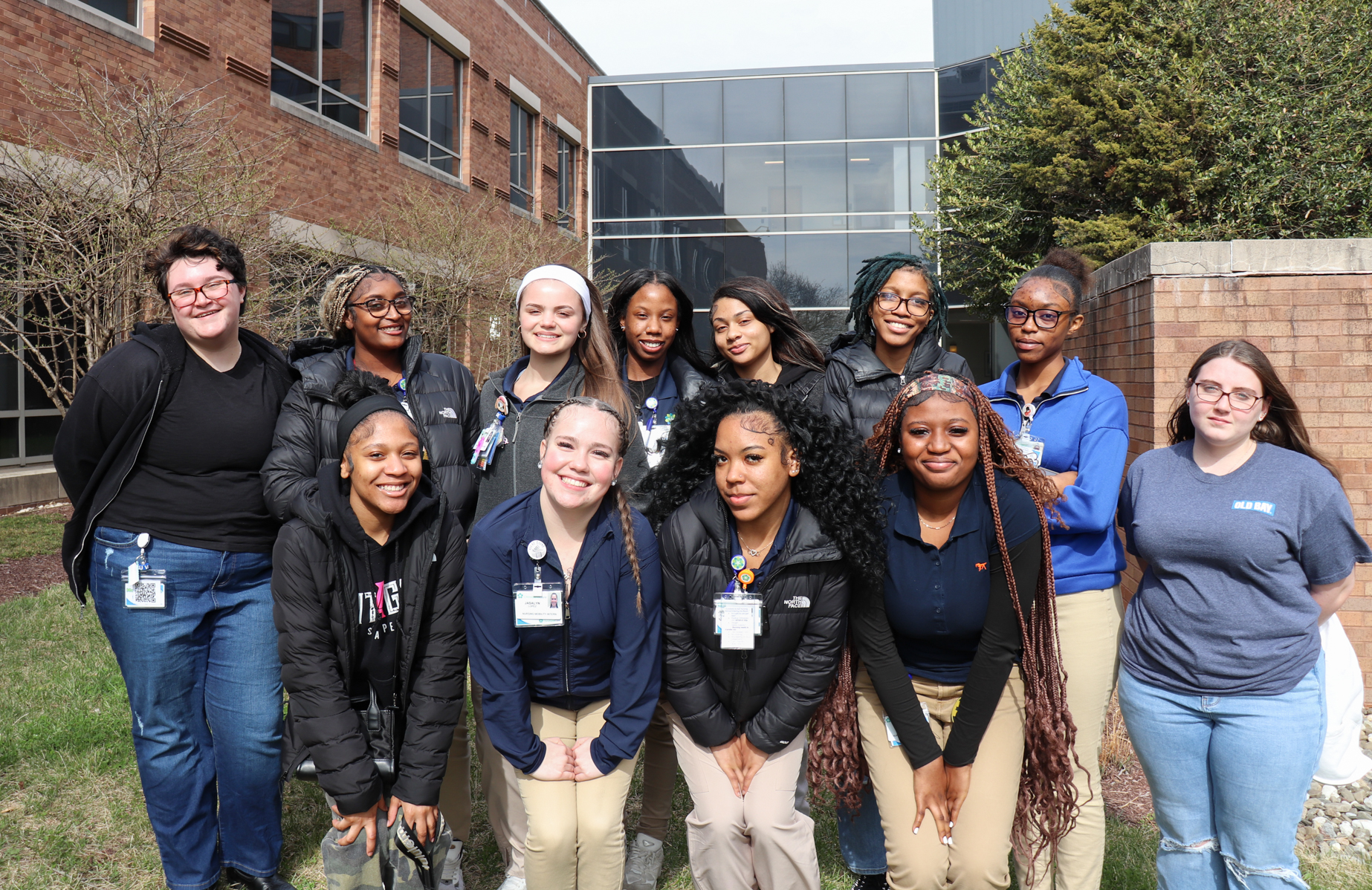
The mobility internship marked a new step in that partnership: the first time vo-tech students were brought into a paid, direct patient-care role inside the hospital. Barbara Feeny, MSN, NPD-BC, RN-BC, HN-BC, nursing professional development manager, helped lead the work to make that happen. She worked closely with Kamela Smith, MEd, director of workforce partnerships and engagement, who spent years building the co-op relationship that brought Hodgson Vo-Tech into the ChristianaCare fold.
“We understood that exposure equals expansion, and opportunity changes lives,” Smith said. “It helps shift future trajectories, opens doors of possibility and addresses disparities for our scholars.”
Across all co-op programs, more than two of three students stay with ChristianaCare after graduation, said Dean Byong Yoo, the workforce partnerships and engagement specialist who facilitates the co-op and serves as liaison with the schools.
The mobility internship is on track to build on that record. Of the 32 interns hired across the first two cohorts, several have accepted patient care technician positions at ChristianaCare following their high school graduation in June. They will continue working while pursuing nursing, physical therapy and other healthcare degrees at colleges across the region.
“There’s so much value in starting with someone this early in their career,” Yoo said. “We teach them our values, our behaviors and ‘The ChristianaCare Way’ from day one.”
For Lynam, that means continuing part-time on her floor while she begins a pre-physician assistant program at the University of Delaware this fall, working toward becoming an orthopedic surgical physician assistant. Other interns are heading to West Chester University, Delaware State University and Neumann University to pursue nursing, athletic training and kinesiology.
Learning on the Floor
For Natalee and her intern partner, Jasalyn Lopez, the appeal of the hospital was the variety. Many of their Hodgson classmates were placed in outpatient settings, where the work tends to look similar from day to day.
“In the hospital, you see everything — any kind of patient, any kind of condition,” Jasalyn said. “People are here for serious issues, and you get to be part of helping them through it.”
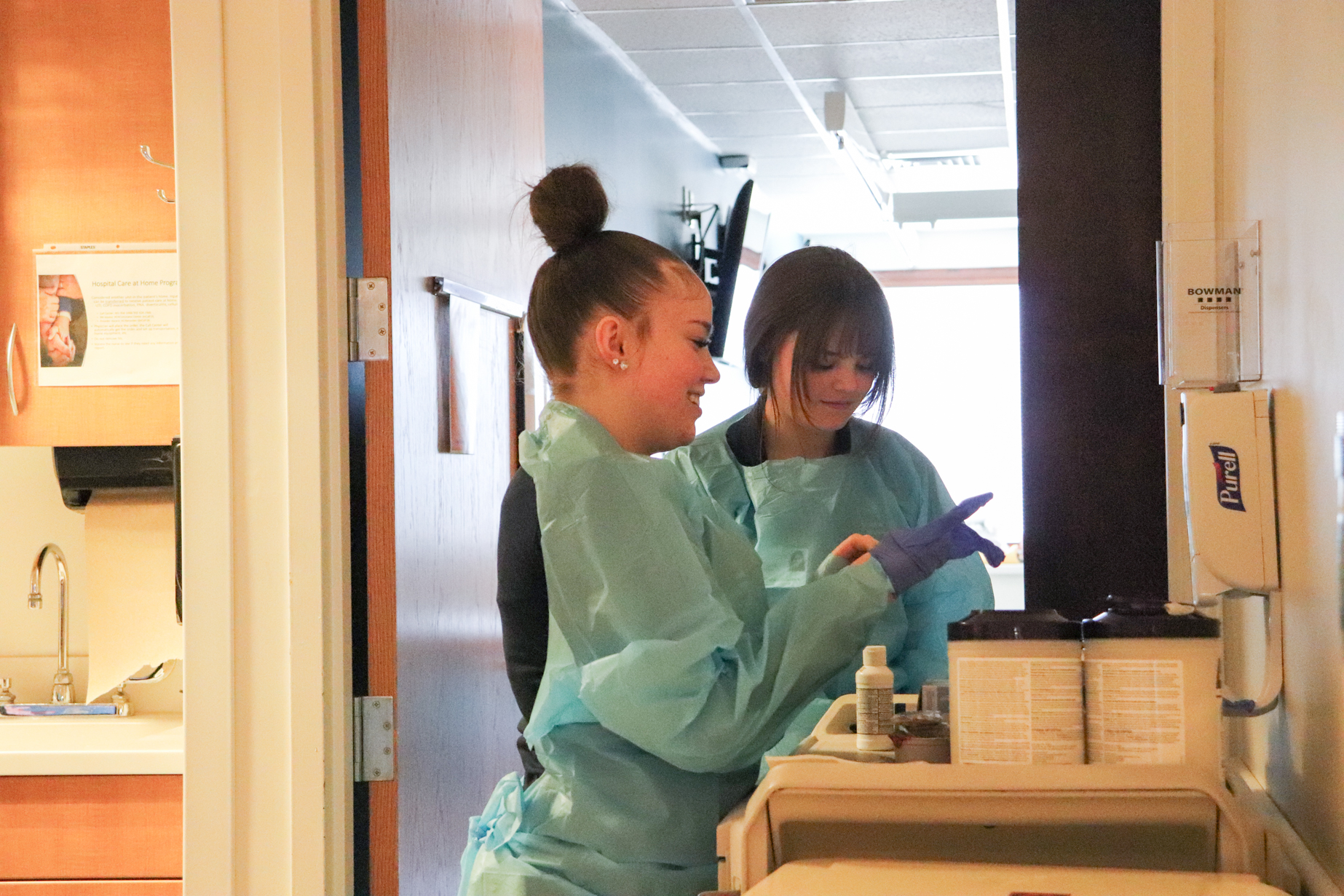
Natalee said the unit functions like an extension of the classroom — sometimes a better one.
“The nurses and the techs are so willing to share with you. Nurses will start explaining things to me and I didn’t even have to ask, because they know that I’m a student,” she said. “Our physical therapy teacher was a nurse here for 13 years, and she always told us, ‘You’re going to learn more on the floor than you ever will in the classroom.’ That’s been proven to us.”
Confidence on the Unit
Yoo said the transformation is visible across the cohort. Students who were too nervous to find parking on day one now move through the hospital like longtime caregivers.
“The confidence, the pride — it’s day and night,” Yoo said. “They walk these halls like they belong here, because they do.”
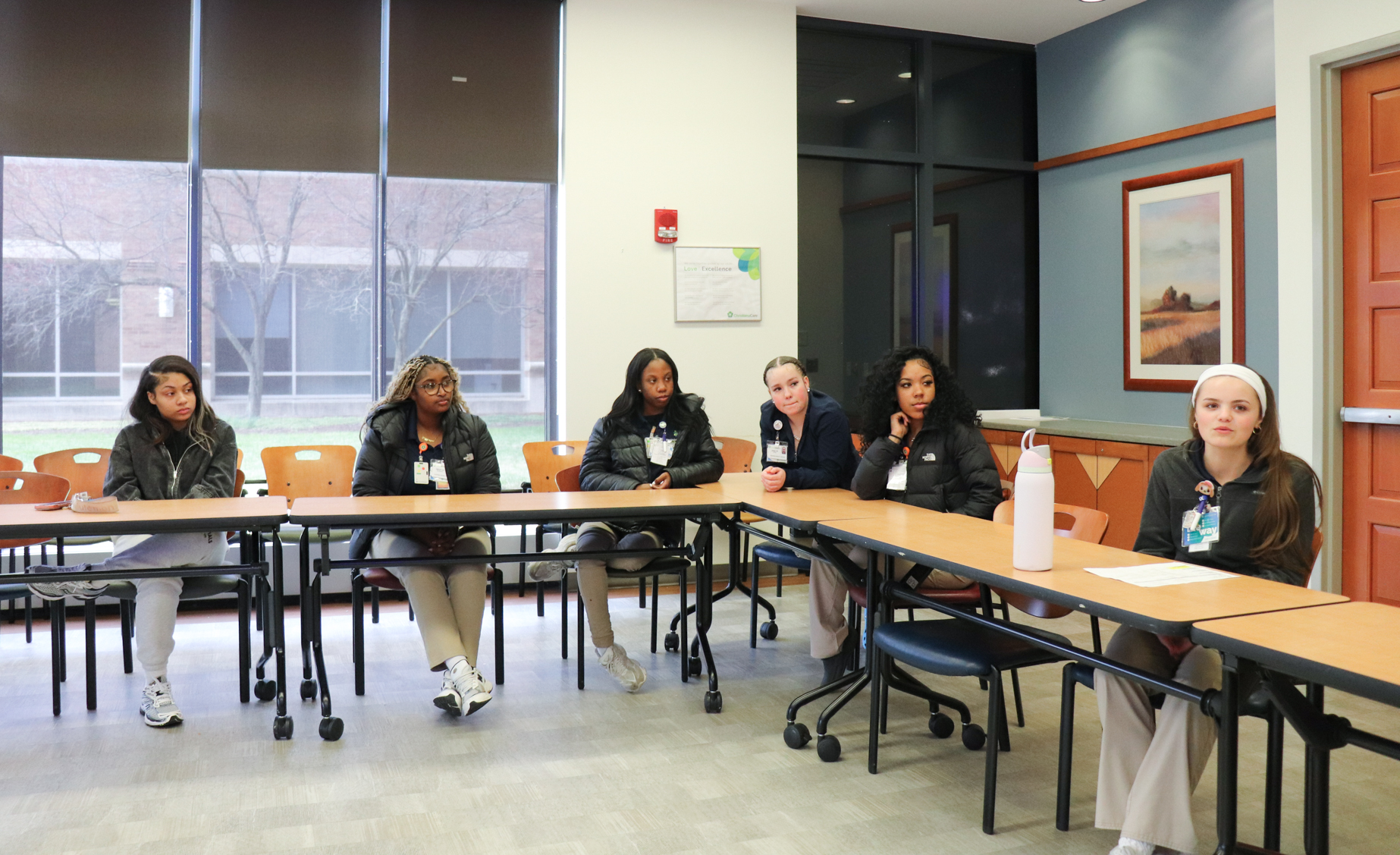
Patients have noticed too. The interns describe regulars who ask, “Are you coming tomorrow?” At least one wrote down a student’s name in hopes of being cared for by her one day.
On the units, nurses, patient care technicians and rehabilitation caregivers have welcomed the additional support, and the energy of younger caregivers joining the team has been, as Yoo put it, “a breath of fresh air.”
What Comes Next
Forty mobility intern positions have been approved for the 2026-2027 school year, with Christiana and Wilmington hospitals starting at the same time in July to give both cohorts a full school year together. Union Hospital joins the program this summer.
“Programs like this show what is possible when community partners come together,” Feeny said. “By opening doors for students and investing in workforce development, we are strengthening patient care today and shaping Delaware’s future healthcare workforce.”