Back on the Unit, This Time as a Medical Student
After surviving a rare brain cancer, Kishan Patel returned to the ChristianaCare units where coordinated expertise and human connection helped save his life.
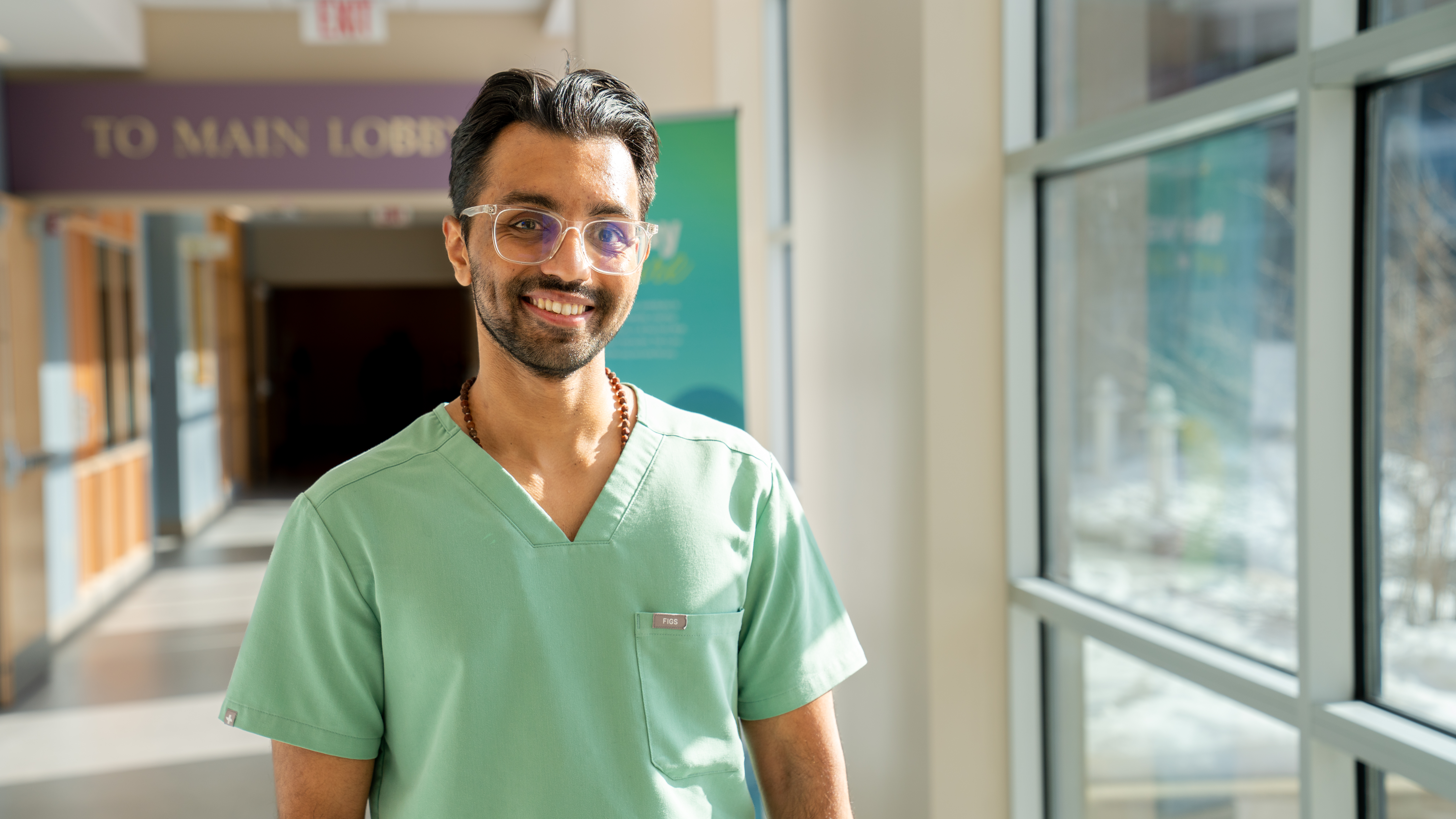
One morning last winter, Franziska Herpich, M.D., walked into a ChristianaCare neurocritical care office where physicians were gathering to review the day’s cases. She said hello to a medical student who was starting his rotation on the unit.
The student introduced himself: Kish — pronounced “quiche” — “like the dish,” he said.
Herpich, a neurointensivist, greeted him politely. Then a colleague reminded her that she had met Kish before — as one of her patients on the Neurocritical Care Unit.
Herpich looked more closely. When she had last seen Kishan Patel less than four years earlier, he was critically ill — frail, on life support and recovering from an illness his care team was still struggling to name.
Now he stood in front of her in a white coat, on the same unit where he had once been treated.
“I didn’t recognize him at all,” Herpich said. “He looked nothing like the patient I remembered.”
In 2022, Kish spent four months at ChristianaCare with primary central nervous system lymphoma, a rare and aggressive brain cancer. Today, he is a fourth-year medical student, training for a career that once seemed impossible to imagine.
From Medical Student to Patient
Kish was born at Christiana Hospital, grew up in Delaware and always knew he wanted to be a doctor. He started at Thomas Jefferson University’s Sidney Kimmel Medical College in 2021.
Then, during his first year, memory problems started. One afternoon he left the library and could not remember how to get home to his apartment three blocks away.
A few weeks later, his sisters drove into the city to bring him home, and he did not remember they were coming. His family got him an appointment with his primary care doctor, and in the parking lot, Kish had a seizure.
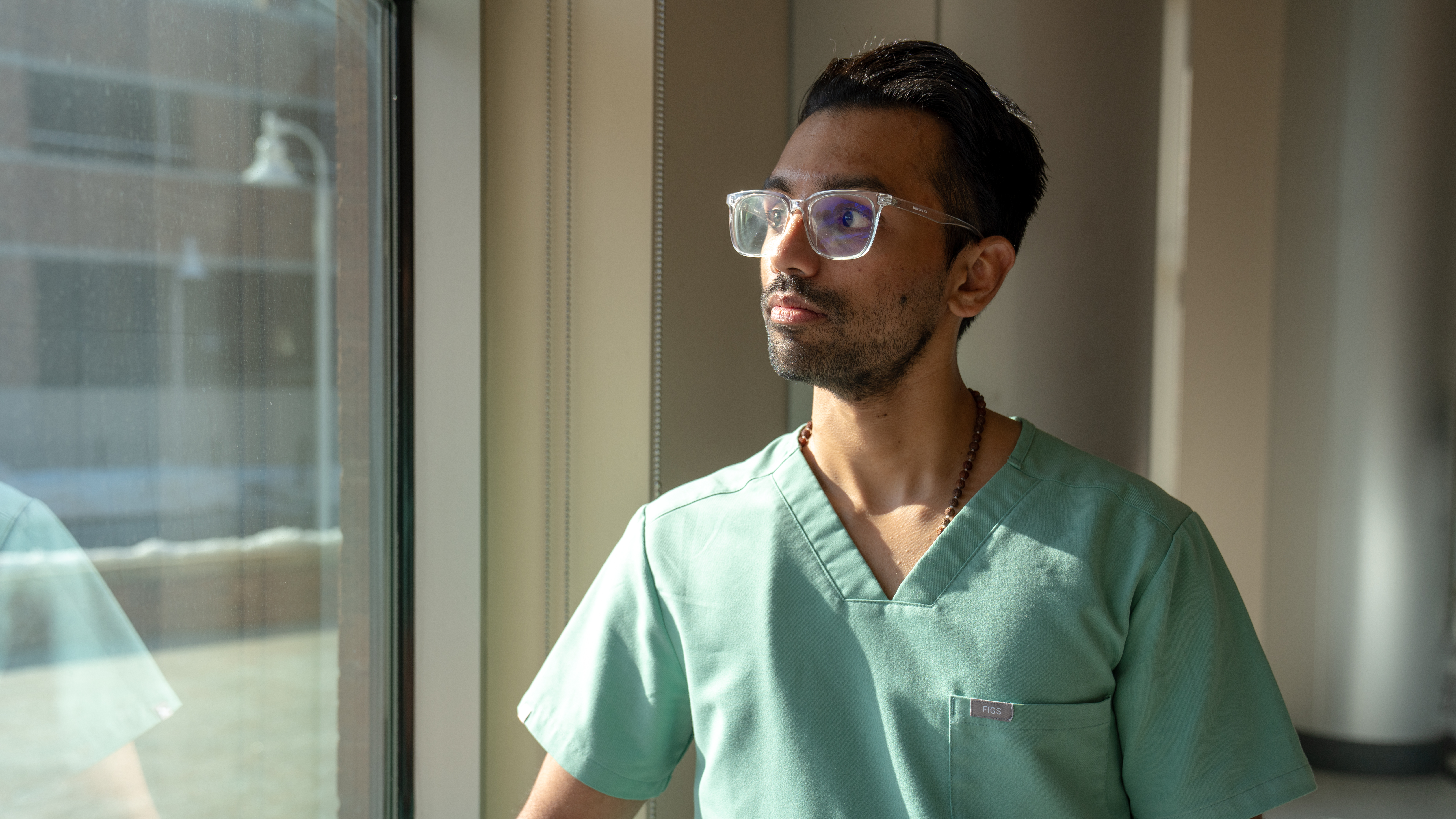
At ChristianaCare, scans showed a mass on the right side of his brain, deep near the brainstem. The team had a leading suspicion: primary CNS lymphoma. Proving it would be the problem.
A Decision They Had Never Made
Pulak Ray, M.D., a neurosurgeon at ChristianaCare, said Kish was already gravely ill when the team began caring for him. He needed steroids to control the swelling in his brain and keep him alive.
But in suspected CNS lymphoma, steroids set a trap: they can destroy the very cells physicians need to biopsy to confirm the diagnosis. The treatment keeping him alive was making it harder to prove what was wrong.
Ray and his team attempted multiple brain biopsies. Each came back inconclusive. Tissue was sent to the Mayo Clinic. Still no answer.
Meanwhile, Kish was slipping away.
“The frightening part was how fast he was deteriorating,” said Kathir Suppiah, M.D., the hematologist-oncologist on Kish’s inpatient care team. “We were seeing changes on a daily basis.”
After the second biopsy, Kish was intubated. One morning, Ray found him decerebrate — a sign the injury had reached the brainstem, the body’s most basic control center. It meant he was at risk of permanent brain damage or death, perhaps within days.
There was no time. Ray called Nicholas Petrelli, M.D., the then-medical director of ChristianaCare’s Helen F. Graham Cancer Center & Research Institute, and asked him to convene an emergency multidisciplinary meeting — not the routine tumor board, but neurosurgery, medical oncology, neurology, neurocritical care, pathology, rheumatology and immunology on the line within hours.
The question was stark: Could they treat Kish without proof of what they were treating?
“We don’t treat without knowing what we’re treating,” Suppiah said. “That is one of the core principles of oncology.”
But the alternative was watching a 27-year-old die while the answer stayed out of reach. “When you’re dealing with a disease growing rapidly in the brain, there’s nowhere for the brain to expand,” Suppiah said. “There’s only so much time.”
One by one, the specialists agreed. They would begin treatment for suspected primary CNS lymphoma.
“We needed to be willing to be a little brave,” Ray said. “And we needed everyone in the room to agree it was the right thing to do.”
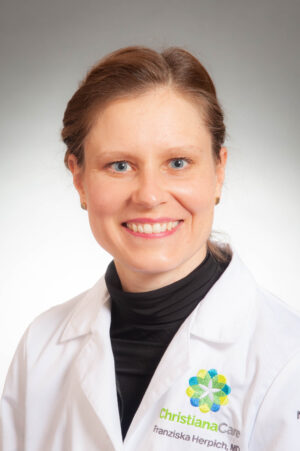
For Herpich, then about six months into her career as an attending neurointensivist, it was a first — not caring for a critically ill patient without every answer, but seeing a team begin lymphoma-directed treatment before a tissue diagnosis could confirm it.
“I have never, before or since, seen a patient treated without a tissue diagnosis,” she said. “And I am so glad we did it.”
Ray credits the structure: the Graham Cancer Center’s multidisciplinary clinics bring specialists together around patients long before any crisis, building the trust that let him pick up the phone and move fast when a patient could not wait.
The family made it possible, too. Suppiah has cared for families who, understandably, struggle with recommendations this difficult. Kish’s family trusted the team enough to let them try.
“I admire their resilience,” he said, “and their trust in our care.”
Click here to make an appointment at the Graham Cancer Center.
Kish received his first chemotherapy while still in the neurocritical care unit — the first time Herpich had ever administered chemotherapy to an ICU patient.
Recovery was not immediate; he needed a tracheostomy and a feeding tube. But about a week in, his breathing improved and he began coming off the ventilator. Two weeks later he was sitting up and answering questions, after a stretch when he had not spoken at all.
He completed four cycles of chemotherapy, with medical oncologist William Lee, M.D., helping guide his outpatient oncology care after the crisis had passed. Then Kish moved through acute rehabilitation.
“I had to relearn how to eat,” Kish said. “I had to relearn how to use the bathroom. I had to relearn how to walk.”
The cancer had affected his left side. He used a cane for his first year back at school, and double vision made it hard to study until he had eye surgery. Through all of it, when his doctors and nurses asked whether he still wanted to be a physician, his answer never changed.
Yes.
Back on the Other Side
Back on rotations, the recognition started immediately. On his first day on the Neurology service, a nurse asked whether he had been a patient there four years earlier. He said yes.
“She said, ‘I took care of you,’” Kish recalled. On the oncology floor, nurses who had cared for him did double takes.
One nurse told Kish that staff usually see former patients again only when something has gone wrong and they have been readmitted. Seeing him walk the unit in a white coat, clipboard in hand, was something else entirely.
“She told me I was a reminder of why they do this,” he said.
For Herpich, who had watched Kish leave her unit still critically ill and never knew how the story ended, seeing him present patients on that same floor was the most gratifying moment of her professional life.
“Never in a million years would I have thought he would recover to that degree,” she said.
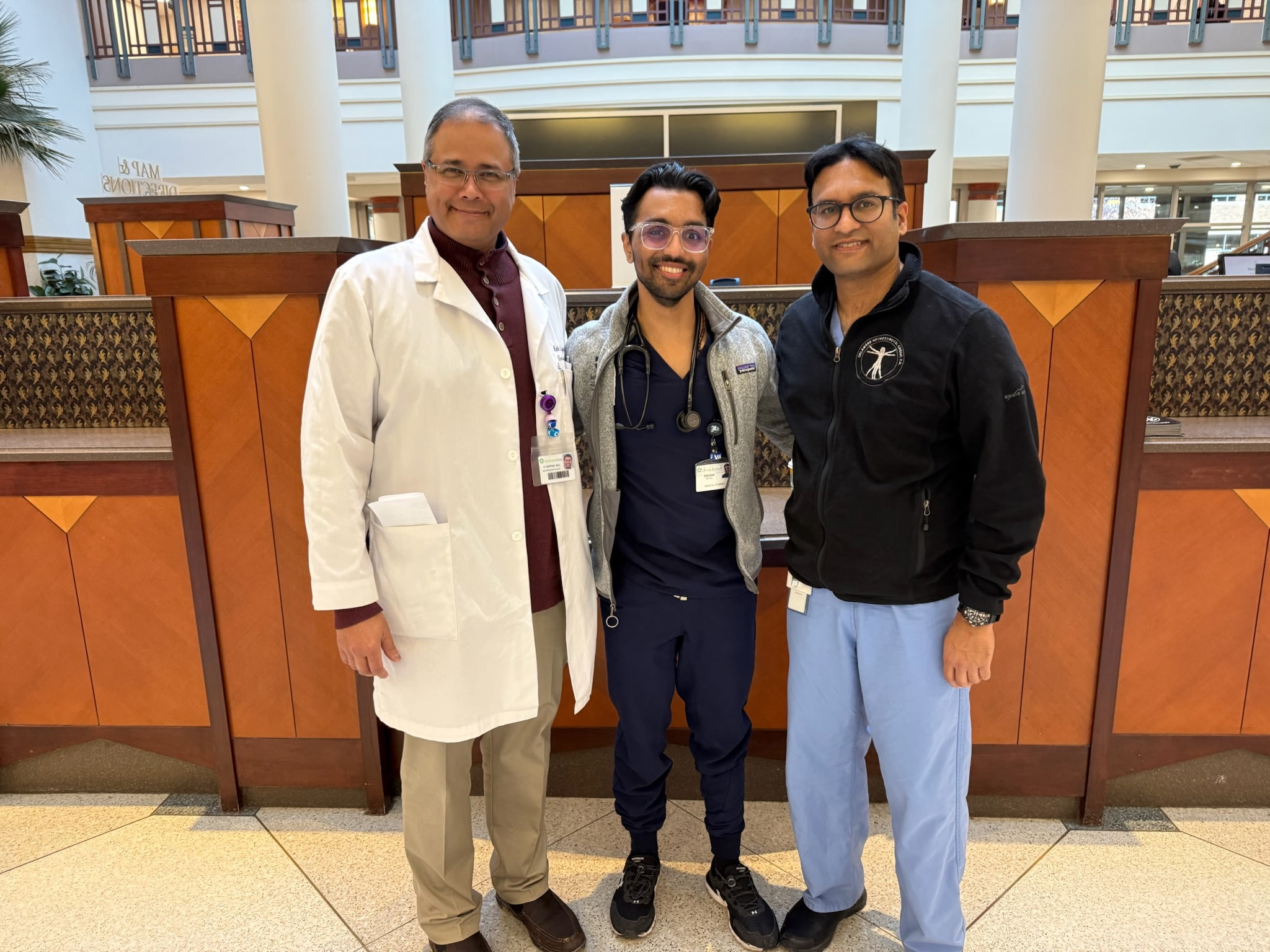
Suppiah had wondered for years how Kish was doing. Then one day he passed a familiar face in the hallway and stared before he placed it.
Later, over coffee, he learned what Kish wanted to do with his life: hematology-oncology, Suppiah’s own specialty.
The Kind of Doctor He Wants to Be
Kish had once crossed hematology-oncology off his list because he thought it would be too sad. His own illness changed that. The treatment saved his life; the way he was treated shaped the kind of doctor he wants to become.
When he was the patient, his doctors and nurses never carried despair into the room. That steadiness, he believes, helped carry him through four months in the hospital.
“When I become a physician, I want to walk into the room and say we’re only allowing positivity in here,” he said.
He thinks often about the small moments that made him feel like a person rather than a diagnosis. The nurse who brought him paper flowers during treatment, because real ones can carry bacteria dangerous to patients receiving chemotherapy; he later started a paper flower drive for chemotherapy patients at Jefferson. He also remembers the day Suppiah noticed the news playing on his TV and asked him what was happening in the world, giving him a brief moment of normal conversation during treatment.
Every year at Jefferson, Kish gives a lecture about what he learned as a patient. His message is simple: patients are humans too — and a small interaction can stay with a patient long after the treatment ends.
Now he wants to give future patients what he most needed himself — reassurance from someone who has sat in the same chair.
“I want to tell them, ‘I’ve been where you are,’” he said, “and that they can get to where I am now.”
Still Moving Forward
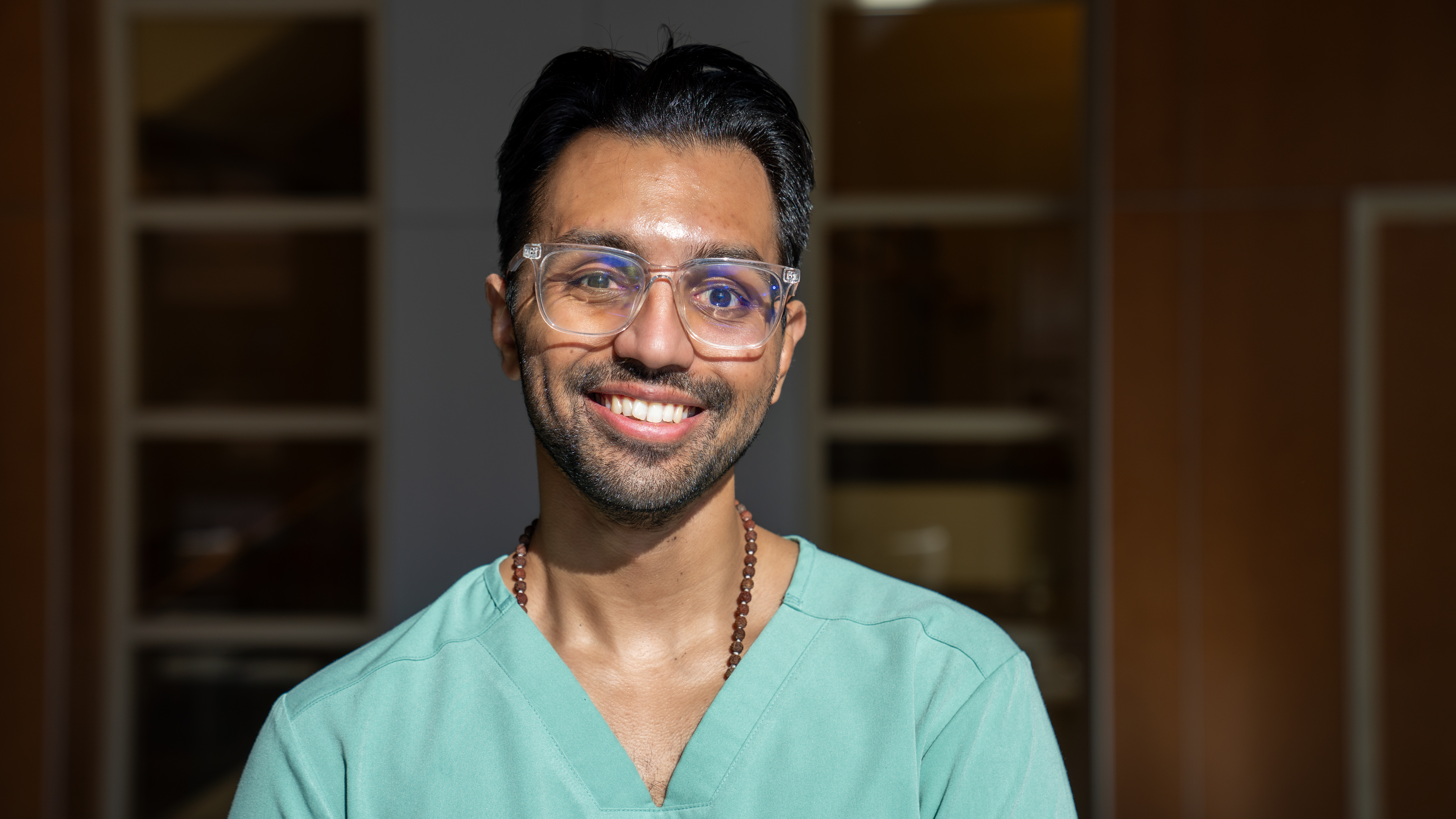
Kish is cancer-free, his scans now annual instead of every six months. He is rebuilding his strength and working his way back to running. He is keeping an open mind about where he will train in residency, but he would love to return to ChristianaCare — to practice in the place where he was born and where his own doctors and nurses made his future possible.
For Suppiah, Kish’s recovery reflects the expertise of the teams who cared for him, the trust of his family and Kish’s own determination.
“This is a success story,” Suppiah said. “This is why we fight for patients. This is why we push the envelope with treatment.”