Researchers From ChristianaCare and The Wistar Institute Identify Promising New Therapeutic Target for Pancreatic Cancer
Study shows that damaged mitochondria leak double-stranded RNA within cancer cells, causing inflammation that fuels cancer growth
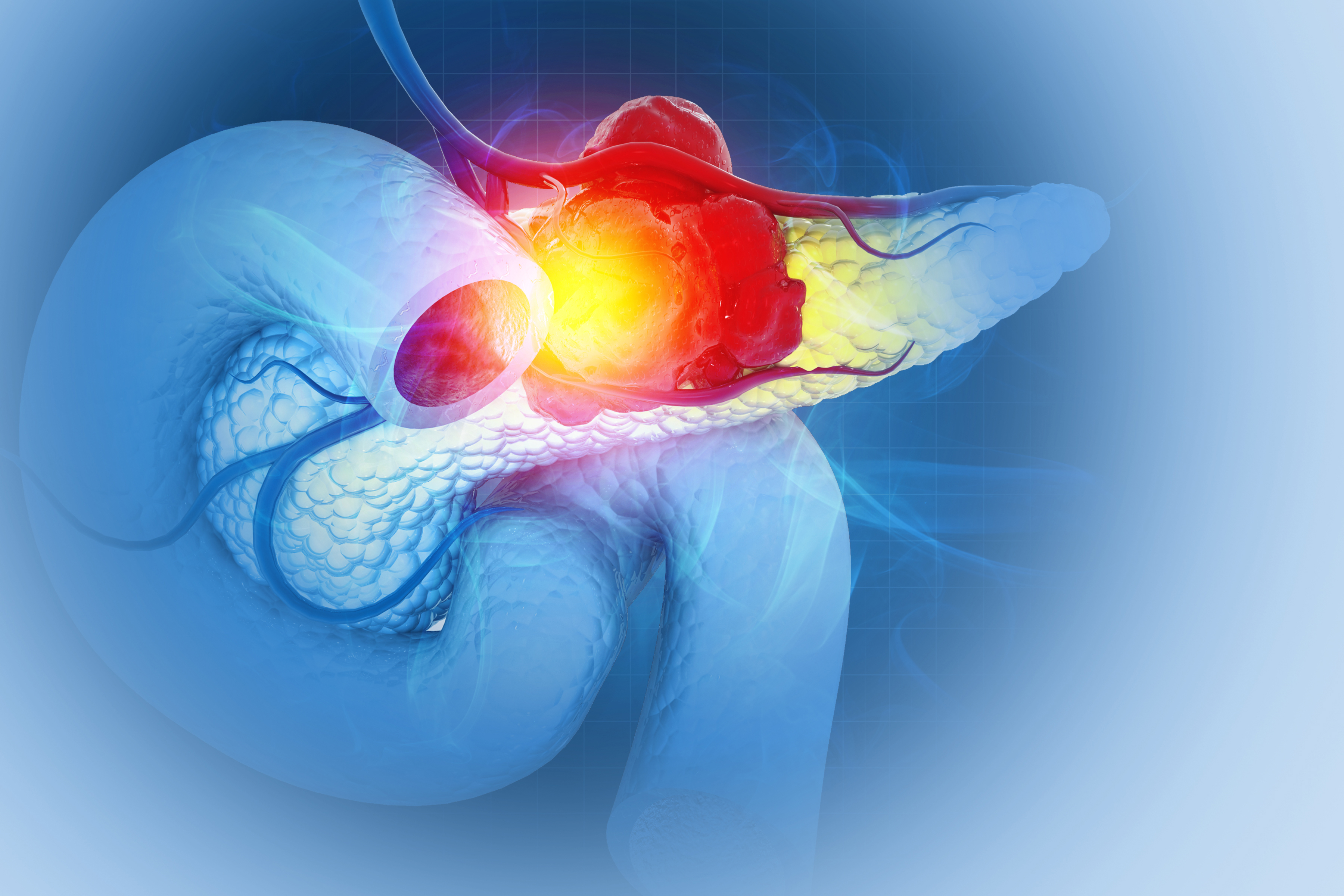
Clinical researchers from ChristianaCare’s Helen F. Graham Cancer Center & Research Institute and scientists at The Wistar Institute and have discovered a vulnerability in pancreatic cancer that could be targeted as a potential therapy. In a new study, published in the Proceedings of the National Academy of Sciences, they show how defective mitochondria within cells spark a process that triggers inflammation. They also show how cancer cells become so dependent on this inflammation to grow that without it, they die.

Unexpected Inflammatory Driver
The discovery is exciting because it suggests that blocking the pathway, called TLR3/TRAF6, could be a promising new therapeutic target for pancreatic cancer, said senior author Dario Altieri, M.D., president and CEO of The Wistar Institute, director of the Ellen and Ronald Caplan Cancer Center, and Robert and Penny Fox Distinguished Professor. It’s the first time this mechanism has been identified as playing a role in cancer, he said.
“It’s been known that mitochondria could release double-stranded RNA and generate inflammation, but not in cancer, and not as a cancer driver,” Altieri explained. “Similarly, this pair of molecules, TLR3 and TRAF6, were known to act as a sensor for double-stranded RNA, but again, not in cancer. So this could be a therapeutic target for pancreatic cancer, where we are in desperate need of therapeutic targets, but perhaps also for other types of cancers.”

What This Means for Patients
“For pancreatic cancer patients, options remain far too limited and the prognosis far too often devastating,” said coauthor Nicholas Petrelli, M.D., director of the Cawley Center for Translational Cancer Research at ChristianaCare’s Helen F. Graham Cancer Center & Research Institute. “What makes this finding so exciting is that it points us toward a genuine vulnerability in the cancer itself — one we may be able to exploit therapeutically.”
Arvind Sabesan, M.D., co-author and section chief of surgical oncology at ChristianaCare, said discoveries like this are critical to advancing care for patients facing pancreatic cancer. “Pancreatic cancer remains one of the most challenging diseases we treat,” Sabesan said. “Research that helps us better understand what the cancer depends on to survive is essential. This study provides new insight that could inform future therapies and, over time, improve outcomes for patients.”
Pancreatic cancer is one of the most aggressive and deadly forms of cancer, with few treatment options. It remains highly resistant to treatment and is typically discovered late, when it’s already at the metastatic stage. Most patients have a very poor prognosis.
How Damaged Mitochondria Fuel Cancer Growth
Mitochondria are organelles found within cells that convert nutrients into energy. Previous studies showed that many tumor cells have mitochondria that are low in an important structural protein called Mic60. These mitochondria are severely damaged but remain present in the cell. Researchers found that these “ghost mitochondria” became powerful signaling hubs for inflammation, but they didn’t understand why.
The new study helps solve that mystery.
Normal, healthy mitochondria are sealed inside a membrane. But the team found that in the mitochondria lacking Mic60, that membrane becomes defective and starts to leak. Double-stranded RNA drains out of the mitochondria into the surrounding cell. The cell’s internal warning system mistakes this for a sign that the cell is infected.
“This finding points us toward a genuine vulnerability in the cancer itself — one we may be able to exploit therapeutically.”—Nicholas Petrelli, M.D.
Turning Inflammation Into a Survival Signal
Researchers found two proteins that act as sensors, detecting the double-stranded RNA and activating a massive inflammatory response, Altieri said. The cancer cells then use this inflammation to grow.
Importantly, the team also found that the cancer becomes so “addicted” to inflammation that it comes to depend on it not just for growth, but survival. When they used drugs to block the sensor proteins, the cancer cells died, while healthy cells survived. In a murine model, this approach caused pancreatic cancer tumors to stop growing.
Altieri said the discovery was a surprise.
“The idea that the reduction of a structural protein could play a role in the damaged mitochondria becoming hubs for stress response signaling, which would translate to a very potent inflammatory response — that was totally unexpected,” he said. “We had no idea that this was a possibility.”
Next, researchers want to learn more about how Mic60 damages the mitochondria’s membrane to release double-stranded RNA, starting the inflammation process — and if this mechanism can be stopped. They also want to continue investigating and developing a TLR3/TRAF6 inhibitor as a potential cancer therapy.
Longstanding Research Partnership
This work builds on a long‑standing collaboration between The Wistar Institute and ChristianaCare’s Helen F. Graham Cancer Center & Research Institute, which began in 2011. Together, the two organizations created a national model that pairs Wistar’s strengths in basic and translational science with the Graham Cancer Center’s ability to bring promising discoveries directly to patients through clinical trials. By linking laboratory research with community‑based cancer care, the partnership helps move new ideas from bench to bedside faster, with a focus on improving outcomes for patients in Delaware and beyond.