Newsweek Honors Center for Rehabilitation at Wilmington Hospital as No. 1 in DE
'The Rehabilitation team gave me something I hadn’t felt in weeks — hope'


For the third year in a row, the ChristianaCare Center for Rehabilitation at Wilmington Hospital has been named one of the nation’s Best Physical Rehabilitation Centers by Newsweek. The CARF-accredited center was also ranked as the top inpatient rehabilitation facility in Delaware for the third time.
“Our dedicated team of health care professionals works hard every day to deliver the highest level of rehabilitation care with love and excellence,” said Jennifer Thomas, MBA, MS, FACHE, vice president of Rehabilitation Services. “We care deeply about our patients and their success however they define it and to the top of their abilities.”
The honor is especially meaningful because it comes at a time of growth for the Center for Rehabilitation. In 2025, the Center expanded its capacity to 30 beds from 26 beds, enabling the care of an additional 216 patients annually. At the same time, the Center is treating more medically complex patients, especially those who need spinal cord injury care.
Learn more about the Center for Rehabilitation at Wilmington Hospital here.
The Center’s patient satisfaction topped 95% in fiscal year 2025.
“We are proud that during growth and increased complexity the Center for Rehabilitation continues distinction in our field,” Thomas said.
Setting Patients Up for Success
The Center for Rehabilitation discharged 767 patients in fiscal year 2025. The average length of stay was 11.9 days.
The Center maintains an average daily census of nearly 100% occupancy. There are plans to expand to 36 beds and, in the long term, ChristianaCare is exploring the feasibility of a 73-bed freestanding acute rehabilitation facility.
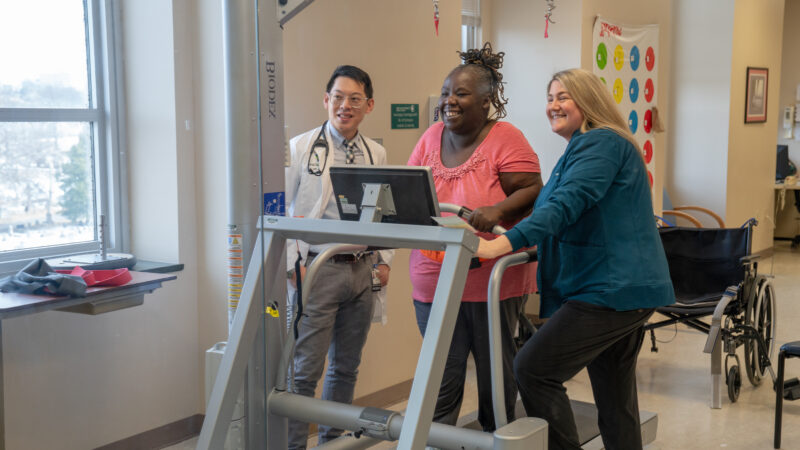
“We all are here to serve our patients and their families and set them up for success,” said Ali Gill, MSN, RN, CEN, nurse manager for the Center for Rehabilitation. “When you have a group of dedicated people with the same mission, you get top-notch care.”
Patients choose to come to the ChristianaCare Center for Rehabilitation, Gill said, and most arrive from acute care settings. To meet the growing need for rehabilitation care, the Center added more nurses, therapists and patient care technicians to its interdisciplinary team, which also includes providers, case managers, social workers, environmental services and transport staff.
‘They Gave Me My Life Back’
The Rehabilitation team is expert in meeting the needs of patients with complex diagnoses, like native Delawarean Kevin Keating.
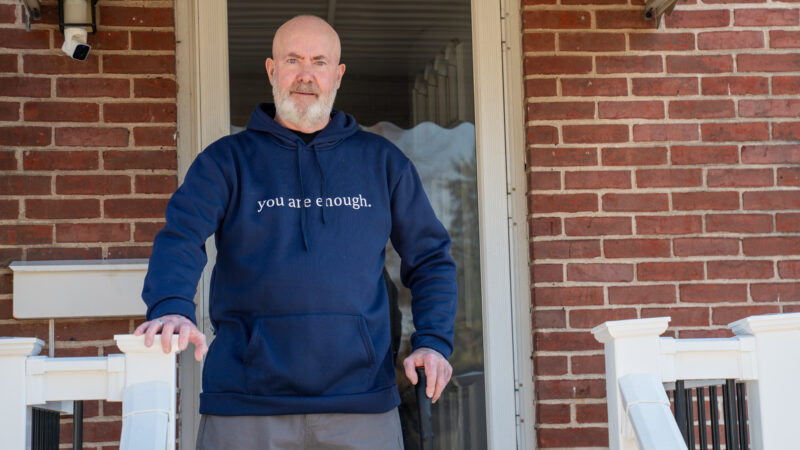
In remission from leukemia, Keating developed a sinus infection that spiraled into pneumonia and sepsis, leading to kidney failure and muscle myopathy that robbed him of strength in his legs and upper body. Within days, he went from feeling unwell to being unable to stand, walk or dress himself.
After a month of hospital care, he arrived at the Center for Rehabilitation at Wilmington Hospital on a stretcher, uncertain of what the future would hold.
“From the moment I arrived,” Keating said, “the Rehabilitation team gave me something I hadn’t felt in weeks — hope.”
“When I had doubts, they wouldn’t let me give up on myself.”— Kevin Keating
Nurses, doctors, therapists and technicians pushed him when he needed it and supported him when doubt crept in. They motivated this career firefighter to be “fit to fight,” a term firefighters use to prepare mentally and physically.
Step by step, Keating relearned the basics such as getting out of bed, dressing himself and transferring from a wheelchair.
With relentless encouragement from his inpatient and outpatient therapy teams, he progressed from wheelchair to walker to cane. By the time he completed his graduation walk, surrounded by cheering staff, he knew they had given him far more than physical strength.
“They gave me my life back. I can never repay the therapists, nurses, and doctors at ChristianaCare; they knew when to push me and when to put an arm around my shoulder,” said Keating, back in his Wilmington home, sipping a cup of coffee. “When I had doubts, they wouldn’t let me give up on myself.”
Collaborative Care for Spinal Cord Injuries
The most common diagnoses treated at the Center are traumatic and nontraumatic spinal cord and brain injuries, stroke, medical disability from long-term hospitalization, and hip and knee injuries.
But more patients arrive at the Center with increasingly complex medical needs, including those with a tracheostomy, a feeding tube, or on long-term antibiotics.
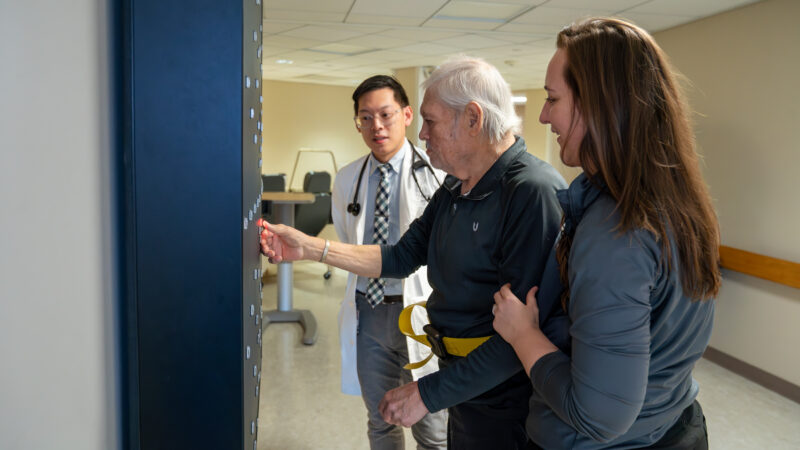
The Center’s spinal cord injury volume has also increased, and more patients have higher-level spinal cord injuries that can cause deficits in all four limbs. Certified rehabilitation nurses therapy professionals with specific expertise in spinal care support these patients.
“The overarching goal is to get patients home safely,” Gill said. At 90 days post-discharge, 95% of patients were living back at home in the community, better than the national average of 93%, according to data from calendar year 2025.
To prepare for that transition, families and caregivers are encouraged to take part in patient care at the Center. They are invited to the gym to participate in therapy and receive hands-on caregiver education about therapy and medication.
Center staff also help caregivers navigate at-home needs, such as getting a hospital bed or adaptive technology delivered.
“Our case managers and social worker collaborate closely with the therapist, the nursing team and the patient’s primary caregiver to ensure that the home environment is suitable for them,” Gill said. “This sets our patients up with the care they need to move forward in their recovery.”