ChristianaCare Study First to Show AI Avatar Can Help Cancer Patients Feel Less Anxious Before Radiation Visits
Patients who met a virtual AI doctor before their consultation reported better understanding, lower stress and higher patient satisfaction in a first-of-its-kind pilot study
For many people with cancer, the first radiation oncology visit can feel overwhelming. Patients are often anxious, emotionally drained, and suddenly faced with complex information that can be hard to absorb in a single conversation. That can make it harder to ask questions, understand treatment, and feel confident about what comes next.
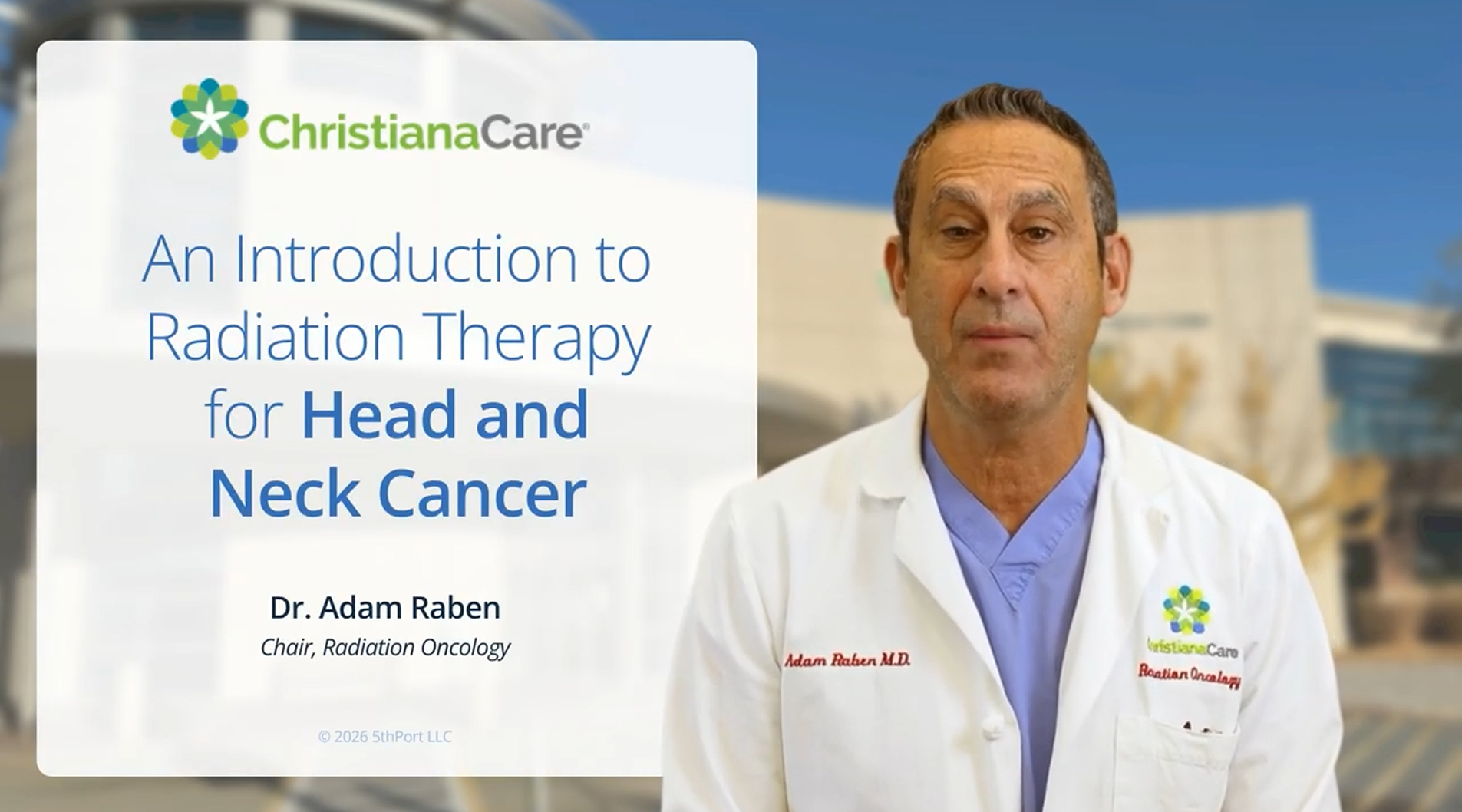
Now, a ChristianaCare study is the first to show that an AI-generated physician avatar can help change that experience. Patients who used the tool before meeting with their doctor reported lower stress, better understanding of their treatment, greater confidence in taking part in care decisions, and higher patient satisfaction. The findings were presented at the 2026 Congress of the European Society for Radiotherapy and Oncology.
Helping Patients Prepare Before the First Conversation
The study was led by Adam Raben, M.D., chair of Radiation Oncology at ChristianaCare’s Helen F. Graham Cancer Center & Research Institute. ChristianaCare created an AI avatar for each physician in Radiation Oncology so patients could receive educational information that looked and sounded like the doctor they would soon meet.
Using AI-generated voice cloning, the avatars delivered personalized, adaptable scripted information to patients at home before their first in-person consultation. The goal was to give patients a chance to learn in a calmer setting, before they walked into one of the most stressful visits in their care journey.
“We see every day how difficult that first appointment can be,” said Raben. “Patients are trying to cope with a cancer diagnosis while also hearing detailed information about treatment. This approach gave them a chance to learn ahead of time, at home, in a way that felt more familiar and easier to follow.”
Personalized Education at Home
The avatar guided patients through personalized educational videos that explained radiation treatment concepts before their consultation. Patients then completed teach-back quizzes to reinforce what they had just learned and help improve retention.
The study included 1,464 patients. One group watched a standard educational video. Another group watched AI-avatar videos with personalized scripts and illustrations designed to make treatment concepts easier to understand. After viewing the material, all patients completed a quiz and a standardized satisfaction survey.
Better Understanding, Lower Stress, Higher Satisfaction
The results were clear.
Patients who viewed the AI-avatar videos showed stronger understanding of their treatment plans, greater engagement in health care decisions and lower stress than patients who watched standard educational videos. Patient satisfaction scores also improved.
“We found that patients were very willing to engage with this kind of digital education before their first radiation oncology visit,” Raben said. “They were not just watching. They were learning, retaining information, and coming in better prepared for a real conversation with their physician.”
Supporting, Not Replacing, Human Care
The study focused on a different use of artificial intelligence than what many people might expect. Instead of using AI behind the scenes in treatment planning or imaging, ChristianaCare used it to help patients feel more informed and less anxious before they ever met their clinician.
“This is not about replacing the physician in any way,” Raben said. “It is about extending the reach of the care team. If patients arrive calmer, better informed, and more confident, we can have a more meaningful conversation when they are in the room with us.”
ChristianaCare plans to continue studying how AI-based education affects anxiety, confidence, patient understanding, and the quality of clinical conversations. Based on the early results, the organization is already extending the same approach beyond radiation oncology.
ChristianaCare Surgical Oncology plans to use the same AI-avatar model to help patients prepare for discussions about surgery and treatment options.
For patients, the goal is simple: help them feel less overwhelmed, ask better questions, and take a more active role in their care.