Virtual Care for Migraines: Alison Potter Cultivates Patient Connections
'Just talking to her makes me feel better'

Alison Potter, D.O., has fostered deep bonds with her ChristianaCare patient base, made up largely of people with migraines who can get treatment right in the comfort of their homes.
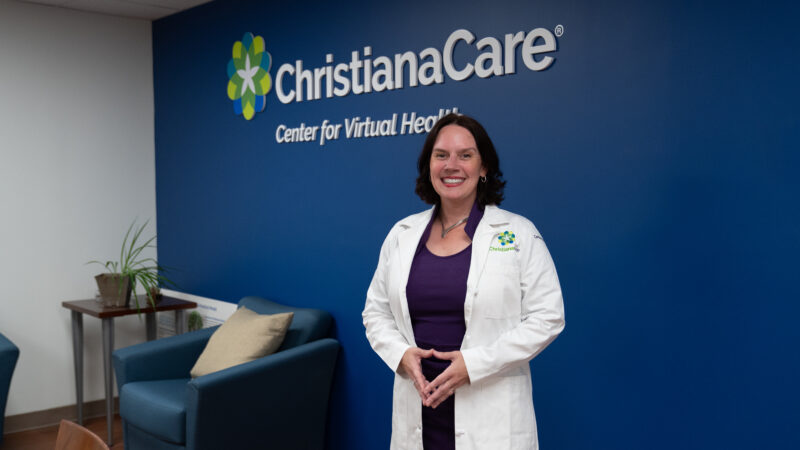
A neurologist in the Headache Clinic in the Center for Virtual Health, Potter sees all of her patients virtually. As a migraine sufferer herself, Potter said virtual visits are ideal for patients for whom an office visit could increase the risk of migraine attack. (Migraine triggers can include extended periods of driving and stress from missing work.)
Click here to make an appointment with Alison Potter, D.O.
Potter can even see her patients in the midst of a debilitating attack. “If they had to come to the office, they would have had to cancel that appointment,” she said. “But with virtual care, they can be under the pillows with the migraine attack and we’re still able to make progress.”
The Comfort of Home—and Cats
Migraine disorder is diagnosed based on health history, rather than a physical exam, Potter said, and cultivating a good rapport with patients helps with diagnosis and treatment. Virtual visits give Potter unique insight into patients’ lives. “Nothing is better than seeing a cat walk across somebody’s screen,” she said. “I’m seeing a piece of them that no physician gets to see in a doctor’s office.”
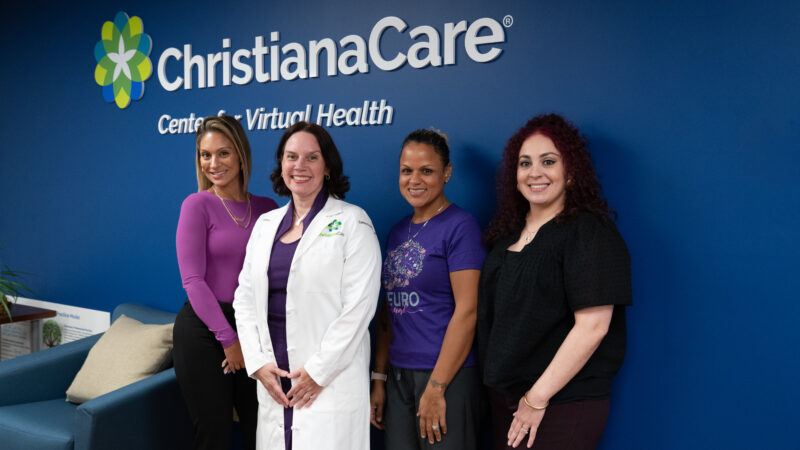
Potter, who is licensed in Delaware, Maryland, New Jersey and Pennsylvania, can also see a broader patient population through virtual health. As one patient said, “Dr. Potter educated me more in our first virtual session than in my 20-year history with any other health care professional.”
Potter was recognized at ChristianaCare’s 2025 The Way We Care Awards for excellence in doctor communication.
Personalizing Treatment Means Better Results
Migraine treatment is complex — often a mix of medications, wearable devices, such as nerve stimulators, and lifestyle modifications, Potter said. “Patients appreciate that I talk about multiple aspects of treatment,” she said. “It’s not just a pill to make things better, but we also can use non-medication treatments.”
Treatment options are personalized to each patient, Potter said, and decisions are always made jointly. “It’s fruitless to prescribe medications that a patient will never take,” she said. “If you haven’t built up that connection with the patient, what you say means nothing.”
Potter makes sure patients understand why she suggests certain treatments, especially if they’re not traditionally prescribed for migraines. For instance, Potter sometimes prescribes anti-seizure or antidepressant medications for migraine patients even though they don’t have epilepsy or depression. “I talk about pathophysiology — everything that happens during a migraine attack with the neurotransmitters in the brain — so they can understand why we make certain medication choices,” she said.
‘She Understood’
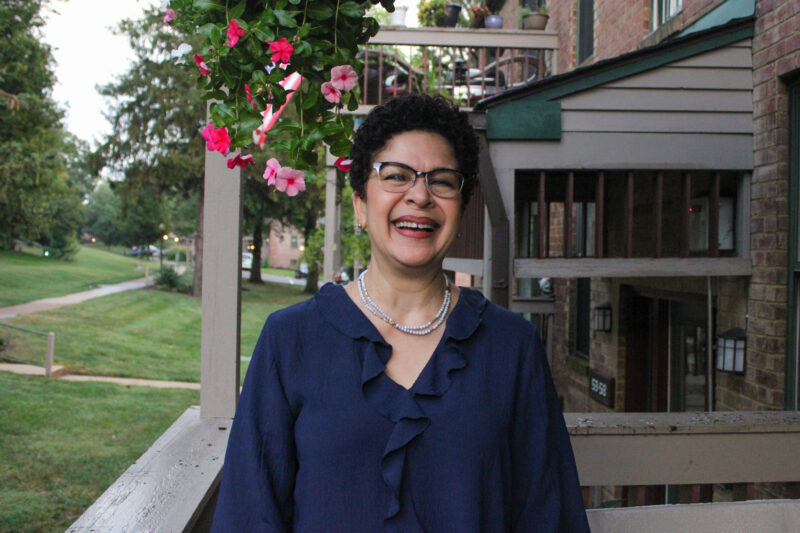
Patient Ruth Leal felt desperate. After a two-day hospitalization for a severe migraine attack, Leal remained in a chronic state of migraine that caused severe nausea and made it difficult to get out of bed. “I had a headache every single day,” she said. “It was just horrible.”
Leal explained her situation to Potter at their first appointment. “Not only did she understand,” Leal said, “but she helped me get out of it.”
Potter prescribed medications for Leal’s migraines and nausea. When one medication caused insomnia, they changed course. Eventually, they found a medication combination that reduced Leal’s migraine attacks from near daily to roughly twice a week.
Throughout the months-long ordeal, Leal said Potter remained patient. “It has been a journey,” Leal said. “But just talking to her makes me feel better.”
To make a gift in honor of a ChristianaCare health care professional, click here.